
Last updated September 10, 2026
Full 25-point door and opener safety check with every visit - springs, cables, rollers, tracks, and your LiftMaster or Chamberlain opener included
You get a price before we start. It does not change when the truck arrives.
 Before
 After
After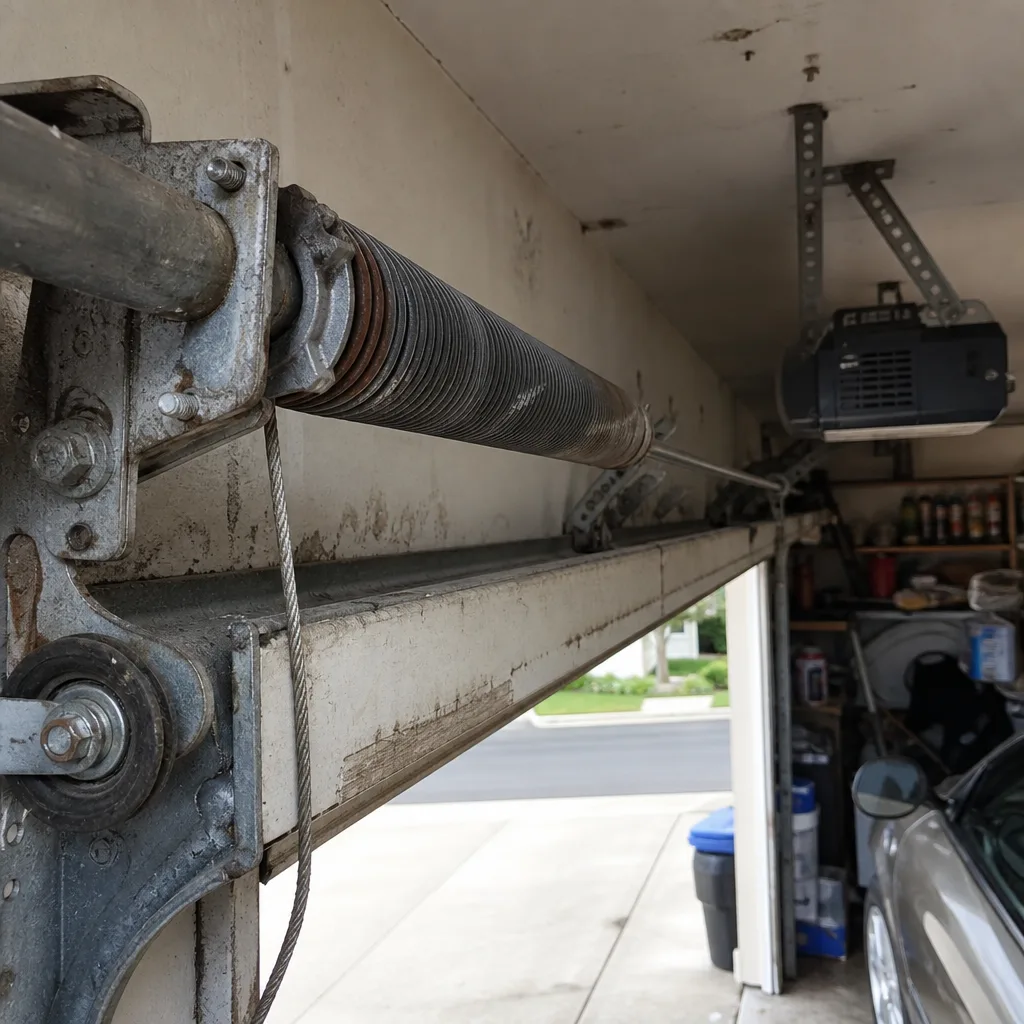 Before
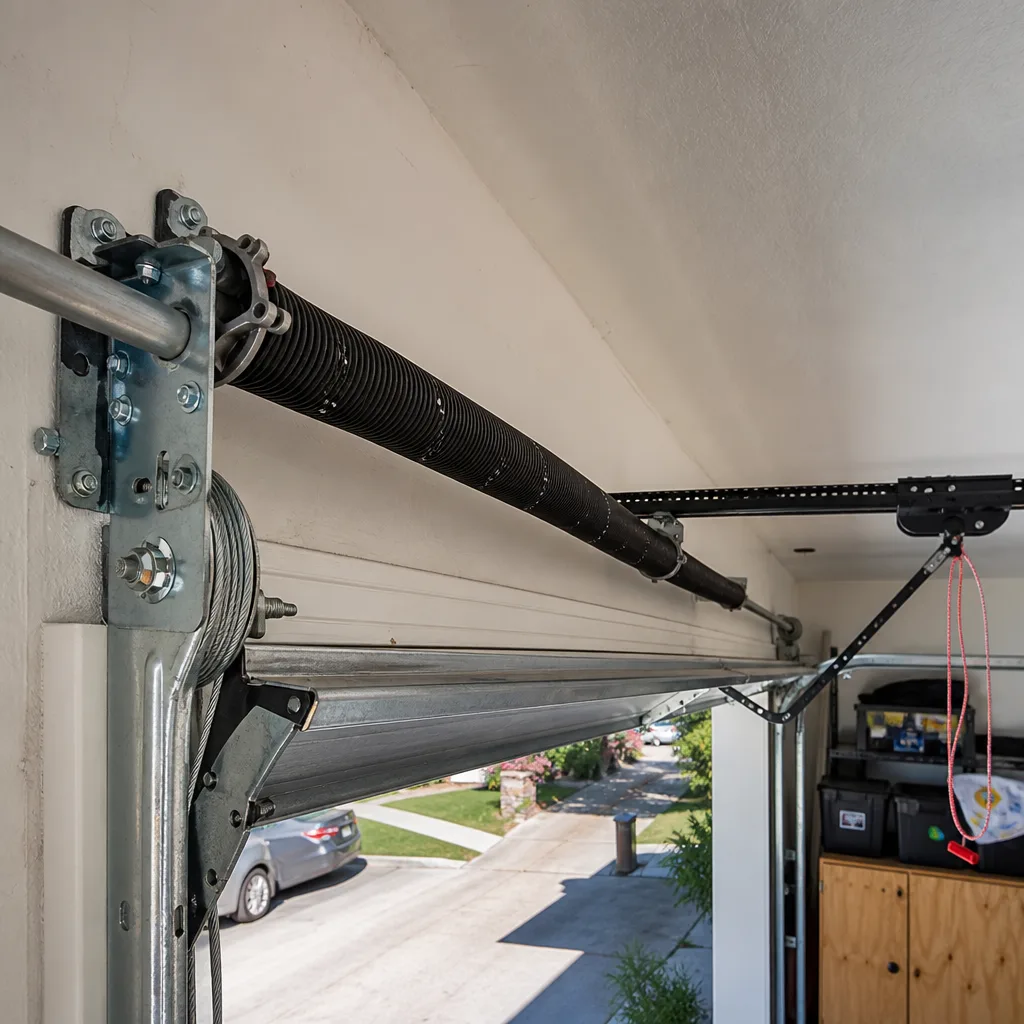 After
After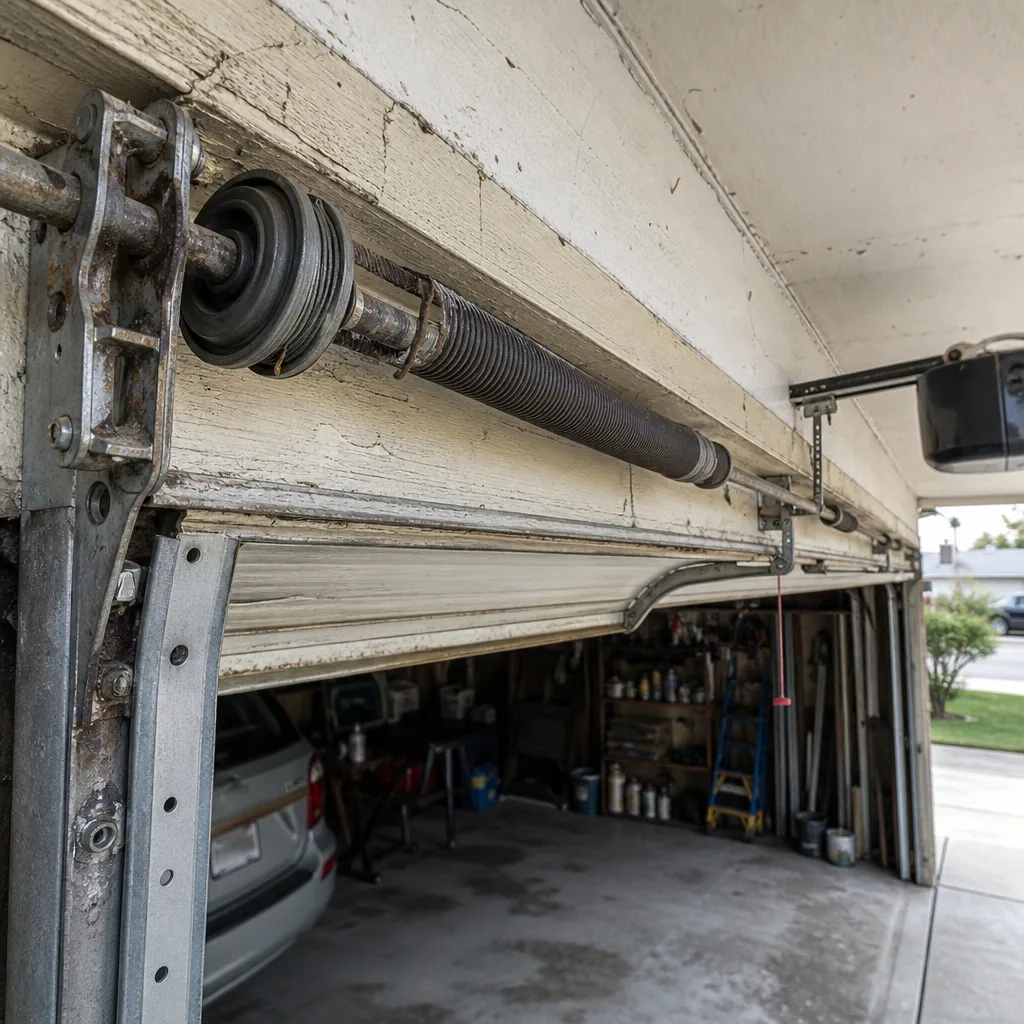 Before
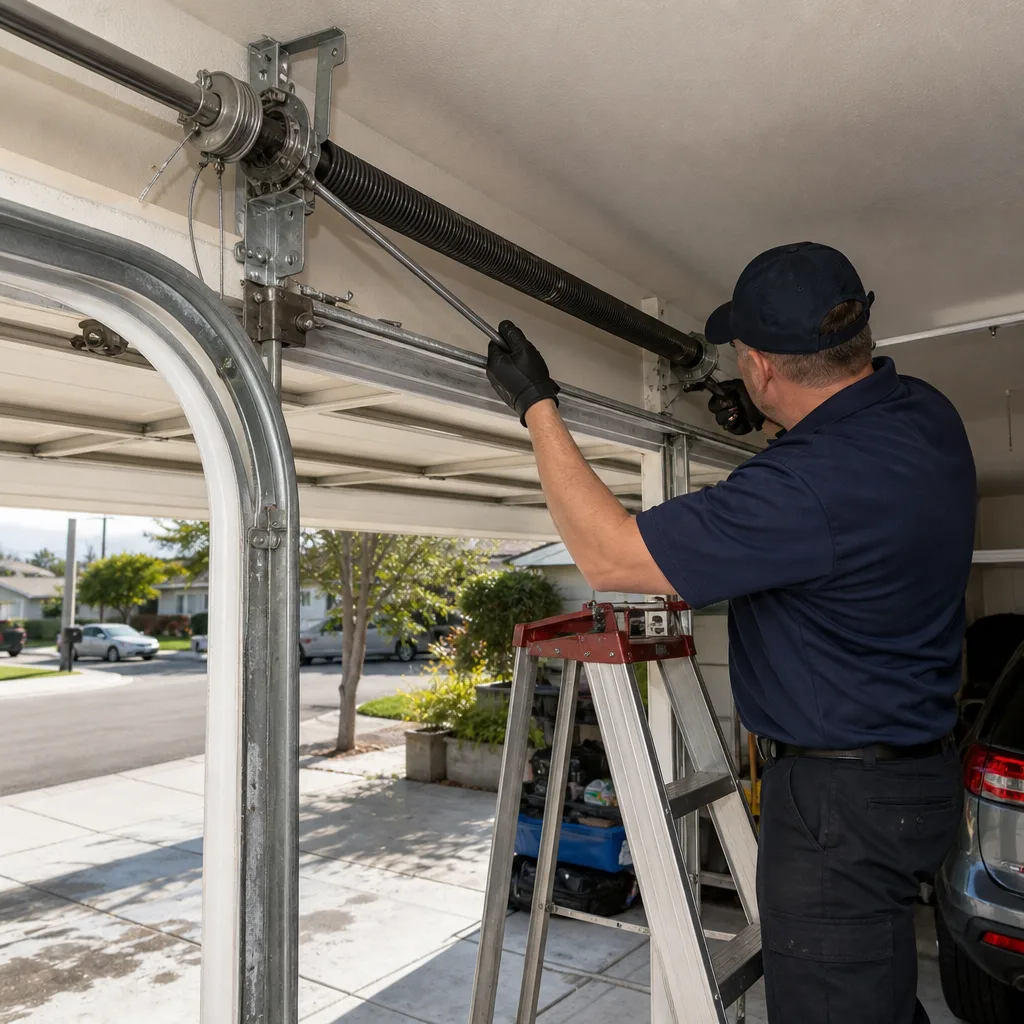 After
AfterGarage Door Warning Signs: A Spring Valley Homeowner’s Reference Guide
A garage door that takes three seconds longer to open than it did six months ago isn’t just slow. It’s telling you the spring tension is dropping, the opener is compensating with excess torque, and both are now closer to failure than either was alone. In Spring Valley, where afternoon heat climbs past 90 degrees for months at a stretch and coastal moisture creeps in from the west, these small signals accelerate faster than homeowners expect. Most of the 200-pound doors we service didn’t fail suddenly. They whispered for weeks while their owners learned to ignore the noise.
This guide maps every signal a garage door sends before it breaks. You’ll learn the 30-second balance test that reveals whether your door carries its own weight, how to read four distinct sounds that predict specific failures, and which warning signs demand a call before your next use.
Quick Answer
The most common garage door warning signs are: slow or labored opening, new or changing sounds (squeals, pops, grinds, bangs), visible gaps or rust on torsion springs, uneven door movement, and unexplained reversal during operation. In Spring Valley’s climate, these signals typically appear 2-8 weeks before failure. A door that won’t stay open at waist height when disconnected from the opener has failed the balance test and needs immediate professional attention.
Table of Contents
- The 30-Second Balance Test: Is Your Door Carrying Its Own Weight?
- Sound Mapping: What Four Noises Predict
- Visual Tells on Torsion Springs, Cables, and Rollers
- When Your Opener Acts Like Something Is Wrong
- How Spring Valley’s Climate Speeds Wear
- The Two-Week Rule: Monitor or Call?
- Common Mistakes to Avoid
- When to Call a Professional
- Frequently Asked Questions
- The Bottom Line
The 30-Second Balance Test: Is Your Door Carrying Its Own Weight?
The balance test is the single most revealing diagnostic a homeowner can perform. It takes half a minute and requires no tools. Yet most Spring Valley homeowners have never done it, and the ones who have rarely repeat it after the first year in a home.
Here’s why it matters. A properly balanced garage door weighs effectively zero pounds at every point in its travel. The torsion springs, not the opener, carry that 150-250 pound load. When springs weaken, the opener picks up the slack. Opener motors are not designed for this. They burn out prematurely. More critically, a door with failing springs can slam shut without warning if the opener fails or power cuts out.
How to perform the balance test:
- Close the door fully and disconnect the opener by pulling the red emergency release cord. The door should be in the down position.
- Lift the door manually with one hand at the center of the bottom panel. It should move smoothly with moderate effort.
- Raise the door to waist height (approximately 3-4 feet off the ground) and release it gently.
- Observe what happens next. A balanced door will stay put, drifting no more than a few inches in either direction. A door that falls rapidly has weak or broken springs. A door that shoots upward has excessive spring tension.
- Repeat at shoulder height (fully open). The door should remain stationary without support.
In our experience across Spring Valley neighborhoods from La Presa to Casa de Oro, roughly 60% of doors over eight years old fail this test. The failure is usually gradual. Homeowners compensate unconsciously, pressing the opener button a second time, noticing the “slow” setting but not connecting it to spring fatigue.
We recently serviced a Craftsman door on Jamacha Boulevard where the homeowner had been lifting with the opener for nearly a year. The springs had lost approximately 40% of their tension. The opener’s motor gears were stripped to metal shavings. What should have been a $240 spring replacement became a $680 opener rebuild. The balance test would have caught it in month one.
Key safety note: Do not attempt to adjust spring tension yourself. Torsion springs store lethal energy. The winding cones can release with enough force to cause serious injury or death. If your door fails the balance test, call a trained technician.
Sound Mapping: What Four Noises Predict
Garage doors produce a predictable acoustic vocabulary. Each distinct sound corresponds to a specific mechanical stress. Learning to distinguish them is like learning to read engine knocks. The sound tells you where to look and how urgently.
The Squeal: Dry Components Needing Lubrication
A high-pitched squeal during opening or closing, especially in the first and last 18 inches of travel, usually indicates dry rollers, hinges, or bearing plates. In Spring Valley, where dust from nearby canyons settles on hardware and summer heat bakes out factory lubricant, this is the most common noise we encounter.
The fix is straightforward: white lithium grease or silicone-based lubricant on rollers, hinges, and the torsion spring itself. Never use WD-40 as a lubricant. It is a solvent and degreaser. It will clean the surface and leave it drier than before within a week.
A squeal that persists after lubrication suggests worn rollers. Steel rollers with worn bearings will squeal even when greased. Nylon rollers, common on Amarr and Wayne Dalton doors installed after 2010, degrade quietly until they crack. By the time they squeal, replacement is usually necessary.
The Pop: Spring Stress and Coil Separation
A sharp pop, often heard once per cycle at the same point in travel, is the sound of a torsion spring coil binding and releasing. It means the spring’s inner diameter has begun to grip the winding cone or stationary cone too tightly, or that individual coils are separating under load.
This sound is a countdown. We have replaced springs in Spring Valley that popped for three weeks, then snapped on a Thursday morning when the homeowner was leaving for a doctor’s appointment. The pop is not an annoyance. It is a mechanical failure in progress.
The Grind: Roller Failure or Track Misalignment
A grinding noise, low and continuous through the travel, indicates metal-on-metal contact where rolling motion should occur. Causes include:
- Flat-spotted steel rollers that no longer rotate
- Bent track sections forcing the roller to scrape
- Loose track mounting brackets allowing the track to shift under load
- Debris (pebbles, dried leaves, hardware) lodged in the track
Spring Valley’s Santa Ana wind events in fall and winter blow substantial debris into garages. We find acorns, eucalyptus bark, and even roof shingle fragments in tracks during service calls. A grinding noise left unaddressed will oval the roller stems and damage the track, turning a $180 roller replacement into a $400+ track rebuild.
The Bang: Cable Slack or Drum Slippage
A sudden bang or clank, distinct from the operator’s normal mechanical sounds, signals cable or drum failure. Lift cables wrap around drums at the top of the door. When a spring breaks, the drum can slip, releasing cable tension abruptly. The bang is the cable snapping against the track or door frame.
Some homeowners mistake this for the opener malfunctioning. It is not. It is a spring or cable failure that has just occurred, and the door is now dangerous to operate. The remaining cable may hold uneven tension, causing the door to twist in its tracks or fall partially open.
If you hear a bang, stop using the door immediately. Disconnect the opener if you can do so safely, and block the door from being used by family members until a technician arrives.
Visual Tells on Torsion Springs, Cables, and Rollers
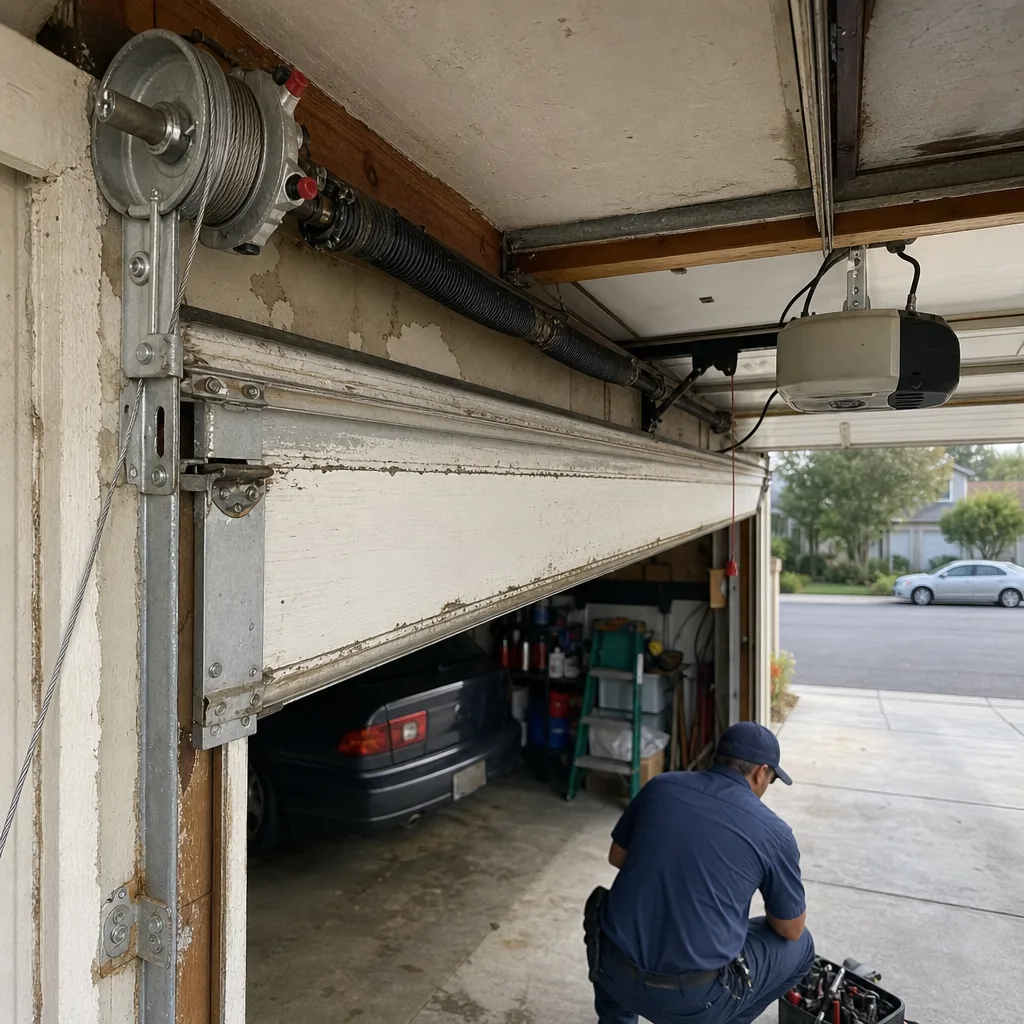
Your garage door presents visible evidence of wear if you know where to look. We recommend a monthly 60-second visual inspection, performed when the door is closed and the opener is unplugged.
Torsion Spring Inspection
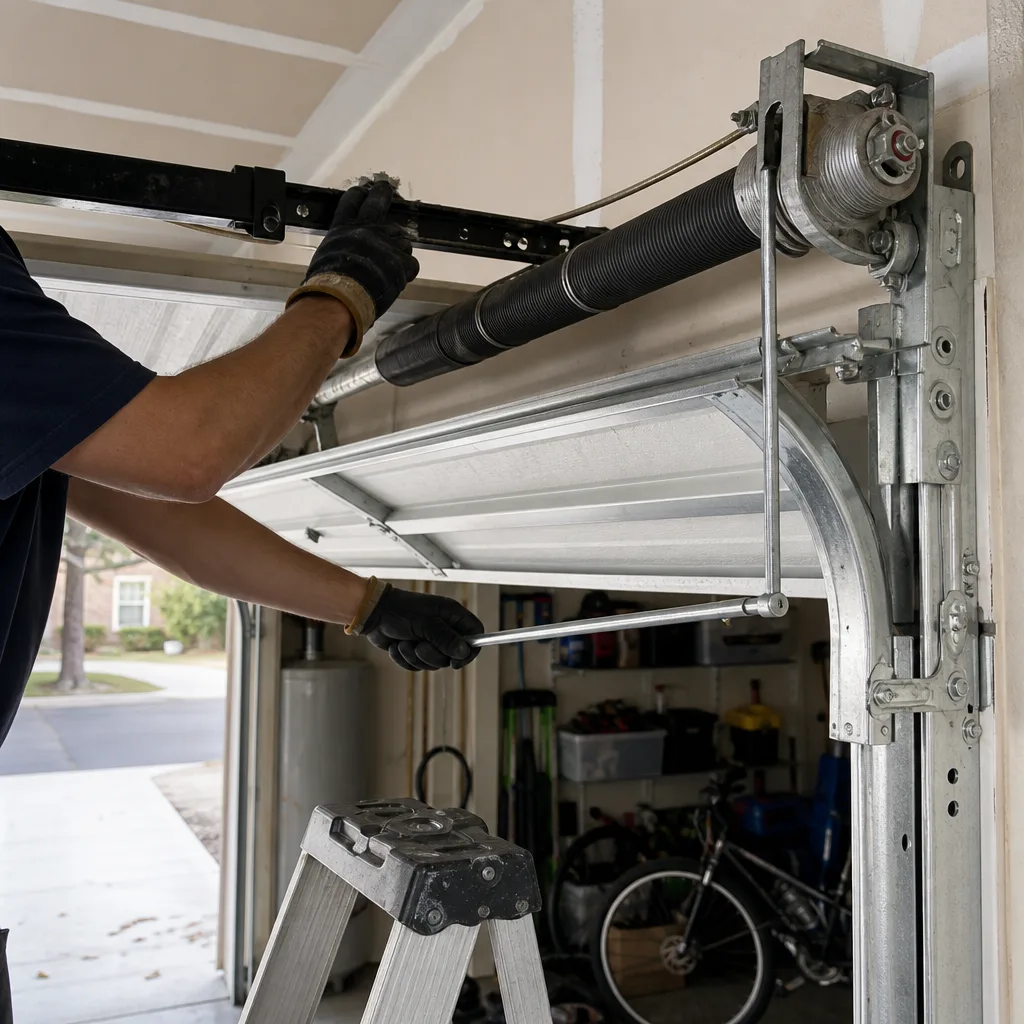
Look at the coil above your door, mounted on the metal shaft. Check for three specific conditions:
- Gap in the coil: A torsion spring should present as a continuous helix. Any visible separation between coils, even a quarter-inch, means the spring has lost tension and is beginning to uncoil. This gap will grow until the spring breaks.
- Rust striping: Orange or brown streaks running lengthwise along individual coils indicate corrosion between windings. Rust increases friction, generates heat, and weakens the steel cross-section. Spring Valley’s marine-layer mornings, especially in valleys and canyon-adjacent homes, accelerate this corrosion compared to inland San Diego County.
- End-cone cracks: The cones at each end of the spring, where it grips the shaft, develop stress fractures before the spring itself fails. These appear as hairline cracks in the cast metal, usually radiating from the set screw holes. A cracked cone can spin on the shaft, releasing spring energy unpredictably.
Cable Condition
Inspect the lift cables where they run from the bottom brackets to the drums. Fraying appears as unwound strands protruding from the cable braid. Even minor fraying reduces the cable’s rated strength disproportionately. A cable with 10% visible fraying has lost approximately 50% of its safe working load.
Look also for cable “bird-caging,” where the braid loosens and bulges outward. This indicates shock loading, usually from a previous spring break or hard stop. Bird-caged cables will fail under normal load.
Roller and Hinge Wear
Steel rollers show wear as flattened or chipped wheels and wobble in the stem. Nylon rollers crack visibly. Hinges develop elongated bolt holes where the door’s weight has wallowed out the mounting points.
On older Raynor and Craftsman doors common in Spring Valley’s 1970s-1980s housing stock, we see hinge failure at the #2 and #3 positions (counting from the bottom) because these carry the greatest flex stress as the door rounds the track curve.
When Your Opener Acts Like Something Is Wrong
Modern garage door openers contain diagnostic intelligence that most homeowners never recognize. When an opener behaves unexpectedly, it is often reading mechanical resistance that the homeowner has not yet perceived.
Unexplained Reversal
A door that reverses direction before reaching the floor, or returns upward after starting to close, is not necessarily a sensor problem. The opener’s force sensor monitors motor current draw. When the door encounters excess friction, from binding rollers, damaged track, or weakening springs, the motor works harder. The opener interprets this as an obstruction and reverses for safety.
Homeowners in Spring Valley frequently call us after adjusting their safety sensors repeatedly, only to find the issue is a dragging door. Before you reposition photo eyes, perform the balance test and inspect the rollers. If the door moves freely by hand but reverses with the opener, then sensor realignment or replacement may be appropriate.
Opener Strain Indicators
Listen for these opener-specific signals:
- Extended run time: A door that previously opened in 12 seconds now takes 16-18 seconds. The opener is pushing through reduced spring assist.
- Startup hesitation: The motor hums or clicks before the door moves. This indicates the initial breakaway force has increased, usually from spring fatigue or track friction.
- Overheating shutdown: The opener stops mid-cycle and resumes after a cooling period. The thermal protector is engaging because the motor is overloaded. This is a late-stage warning. Continued use will destroy the motor.
We service LiftMaster and Chamberlain openers throughout Spring Valley, and the diagnostic LED patterns on these units will often flash specific codes indicating excess force. A homeowner who knows to check the manual for code interpretation can save a service call. But when the code reads “excessive closing force” or “motor overheating,” the root cause is almost always mechanical, not electrical.
How Spring Valley’s Climate Speeds Wear
Spring Valley occupies a transitional zone between San Diego’s coastal influence and the inland desert. This geography creates specific conditions that accelerate garage door deterioration in ways that homeowners in coastal Del Mar or desert El Centro do not experience.
Temperature cycling: Summer days in Spring Valley routinely reach 85-95 degrees, while nights drop to 60-65. This 30-degree daily swing causes steel springs to expand and contract. Each cycle induces micro-fatigue. Over 42 years of service in this market, we have documented that torsion springs in Spring Valley average 18-24 months shorter lifespan than identical springs in more thermally stable climates.
Marine layer intrusion: Morning fog pushes inland through the Sweetwater River valley, reaching Spring Valley homes below 400 feet elevation with regularity from May through July. This moisture deposits on cold steel surfaces, initiating corrosion that is invisible until the rust striping appears. Homes in the La Presa area, closer to the reservoir and lower in elevation, see this pattern most acutely.
Dust and debris: The chaparral hills surrounding Spring Valley generate fine particulate, especially during Santa Ana wind events. This dust infiltrates roller bearings, hinge pins, and opener gear housings. It acts as grinding compound when combined with residual lubricant. Annual cleaning and re-lubrication, part of our $89 Seasonal Tune-Up, extends component life measurably in this environment, as detailed in our Seasonal Garage Door Care for Spring Valley: Year-Round Homeowner’s Guide.
Sun exposure on exterior doors: South and west-facing garage doors in Spring Valley absorb intense afternoon sun. Steel panels expand. Vinyl weatherstripping degrades. If your door faces direct sun and the bottom seal has hardened or cracked, that is not merely cosmetic. A failed seal allows dust, moisture, and pests into the track system, compounding wear on all moving parts.
The Two-Week Rule: Monitor or Call?
Not every warning sign demands immediate emergency response. Some permit brief monitoring. Others require stopping use and calling before the next cycle. This distinction protects your safety and your budget.
Signs Safe to Monitor for Two Weeks
- Minor squeaking that responds to lubrication
- Slight slowing of opener cycle time (under 4 seconds increase)
- Cosmetic rust on track surface, not on springs or cables
- Weatherstripping gaps without accompanying mechanical symptoms
During monitoring, perform the balance test weekly. Document changes with your phone. If the condition worsens, escalate to immediate service.
Signs Requiring Call Before Next Use
- Door fails balance test at any height
- Visible gap in torsion spring coil
- Any bang, pop, or grinding noise that is new or worsening
- Door reverses unpredictably or opener overheats
- Frayed or bird-caged lift cable
- Door hangs unevenly or binds in tracks
- Cracked hinge, roller, or end cone
These conditions present genuine safety hazards. A door with failed springs can fall with crushing force. A frayed cable under tension can whip unpredictably. The cost of an emergency call is always less than the cost of injury or property damage.
Our trucks carry springs, cables, rollers, and openers for all major brands. Most garage door repair in Spring Valley is completed in a single visit because we arrive prepared. The flat price is stated before any work begins. There are no surprises on the bill.
Common Mistakes to Avoid
- Ignoring gradual slowing. A door that opens in 15 seconds instead of 12 is not “just getting old.” It is a measurable mechanical change with a specific cause. Address it while the repair is minor.
- Using the wrong lubricant. WD-40, 3-in-1 household oil, and grease with graphite additives all damage garage door components. Use white lithium grease or silicone spray formulated for door hardware.
- Testing the balance test with the opener connected. This yields no useful information and risks damaging the opener clutch. Always disconnect first.
- Assuming one broken spring means the other is fine. Torsion springs are installed in matched pairs. When one breaks, the other has experienced identical cycles and stress. Replacing one and not the other guarantees a second failure within months. We always replace springs in pairs.
- DIY spring replacement after watching online videos. The tutorials rarely show the windings that slipped and struck the presenter’s hand, or the cone that fractured under load. We have been called to homes where a homeowner’s attempted repair bent the door, damaged the opener, and still required professional service. The savings evaporated and the risk was real.
- Waiting for “both sides” to fail on a dual-spring door. Some homeowners believe a door with one broken spring is “half working” and can continue in use. It cannot. The opener is now lifting the full door weight on one side, twisting the door in its tracks and destroying the opener.
- Neglecting the exterior door in direct sun. Spring Valley homeowners with south-facing garages often focus maintenance on the interior mechanics while the sun-baked panel finish chalks, the seal hardens, and thermal expansion stresses the hinge points. The door is a system. All of it needs attention.
When to Call a Professional
Call when any sign in the “immediate” category appears. Call when you are uncertain which category applies. Call when the door has reached 10 years of age and has never had professional inspection. The inspection itself is inexpensive. The failures it prevents are not.
Carl Dutton and the team at Mainspring Garage Door Co. home have served Spring Valley since 2016, building on 42 years of continuous operation in San Diego County. We answer our phones with a live person, 24/7, including nights, weekends, and holidays. Our technicians arrive in uniform, background-checked, with the parts to finish most jobs in one visit. The price is flat, stated upfront, and backed by our 90-Day Done Right Promise in writing.
For a free estimate in Spring Valley, call (619) 825-2139.
Frequently Asked Questions
Spring replacement in Spring Valley typically runs $180-$340 for standard torsion springs on a residential door, depending on spring size, door weight, and whether one or both springs require replacement. We quote the exact price before any work begins, and our $50 Off Any Repair Over $250 applies to qualifying jobs. Call (619) 825-2139 for a free estimate.
No. A door with one broken spring places the full load on the remaining spring and the opener motor. The door will twist in its tracks, damaging rollers, hinges, and the opener. Continued use risks catastrophic failure and personal injury. Disconnect the opener if you can do so safely, and call for service before the next use.
Unexplained reversal is usually the opener’s force sensor detecting excess mechanical resistance, not a sensor malfunction. Binding rollers, damaged track, or weakening springs increase the motor’s current draw. The opener interprets this as an obstruction and reverses. Perform the balance test and inspect rollers before adjusting photo eyes. If the door moves freely by hand, then sensor realignment may resolve the issue.
Test monthly. The balance test takes 30 seconds and reveals spring condition before visible symptoms appear. For doors over 8 years old, or doors in Spring Valley’s climate with its temperature cycling and marine layer exposure, monthly testing is especially important. Mark your calendar or set a phone reminder.
Yes. Our trucks are stocked with springs, cables, rollers, hinges, and openers for all major brands including LiftMaster, Chamberlain, Genie, Clopay, Amarr, Wayne Dalton, Craftsman, and Raynor. Most garage door repair in Spring Valley is completed in a single visit because we arrive with the necessary parts already on the truck.
The Seasonal Tune-Up includes full balance testing, lubrication of all moving parts, inspection of springs, cables, rollers, hinges, and weatherstripping, track alignment check, opener force and limit adjustment verification, and safety sensor testing. In Spring Valley’s dusty, thermally cycling environment, this annual service extends component life and catches developing problems before they become emergencies. Call (619) 825-2139 to schedule.
The Bottom Line
Garage doors do not fail without warning. They slow, they squeal, they pop, they grind, they reverse, they gap, they rust. Each signal is specific, measurable, and predictive. The homeowner who learns to read these signs gains weeks or months of advance notice, turning an emergency call into a scheduled repair, a $680 surprise into a $240 maintenance visit.
In Spring Valley’s particular climate, with its temperature swings, marine layer moisture, and wind-borne debris, these signals appear sooner and progress faster than in more forgiving environments. The 30-second balance test, the four-sound vocabulary, and the visual inspection checklist in this guide give you what you need to stay ahead.
When a sign demands professional attention, Mainspring Garage Door Co. offers free estimates, upfront pricing, and same-day service for most repairs. We’ve been here since 1984. We’ll be here when you call.
Written by Carl Dutton, Owner at Mainspring Garage Door Co., serving Spring Valley since 2016.