
Last updated September 10, 2026
Full 25-point door and opener safety check with every visit - springs, cables, rollers, tracks, and your LiftMaster or Chamberlain opener included
You get a price before we start. It does not change when the truck arrives.
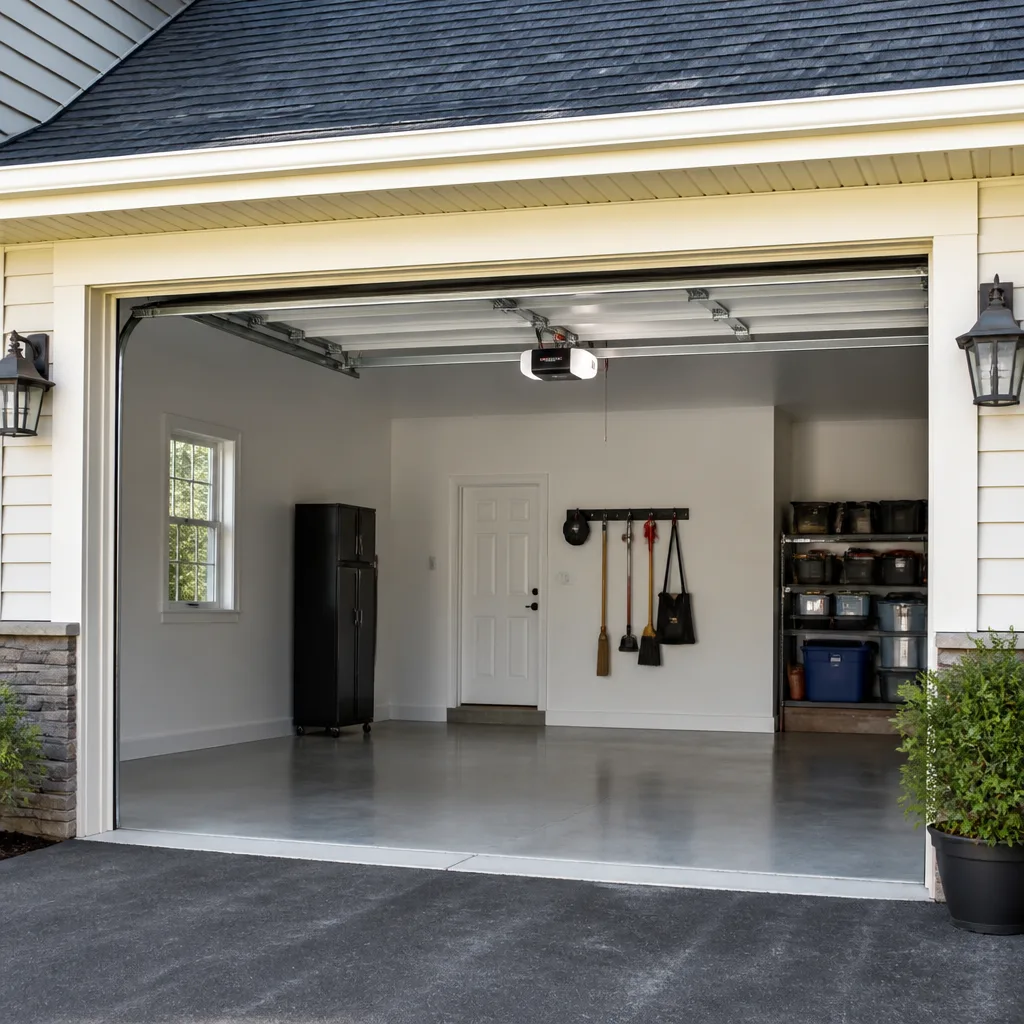
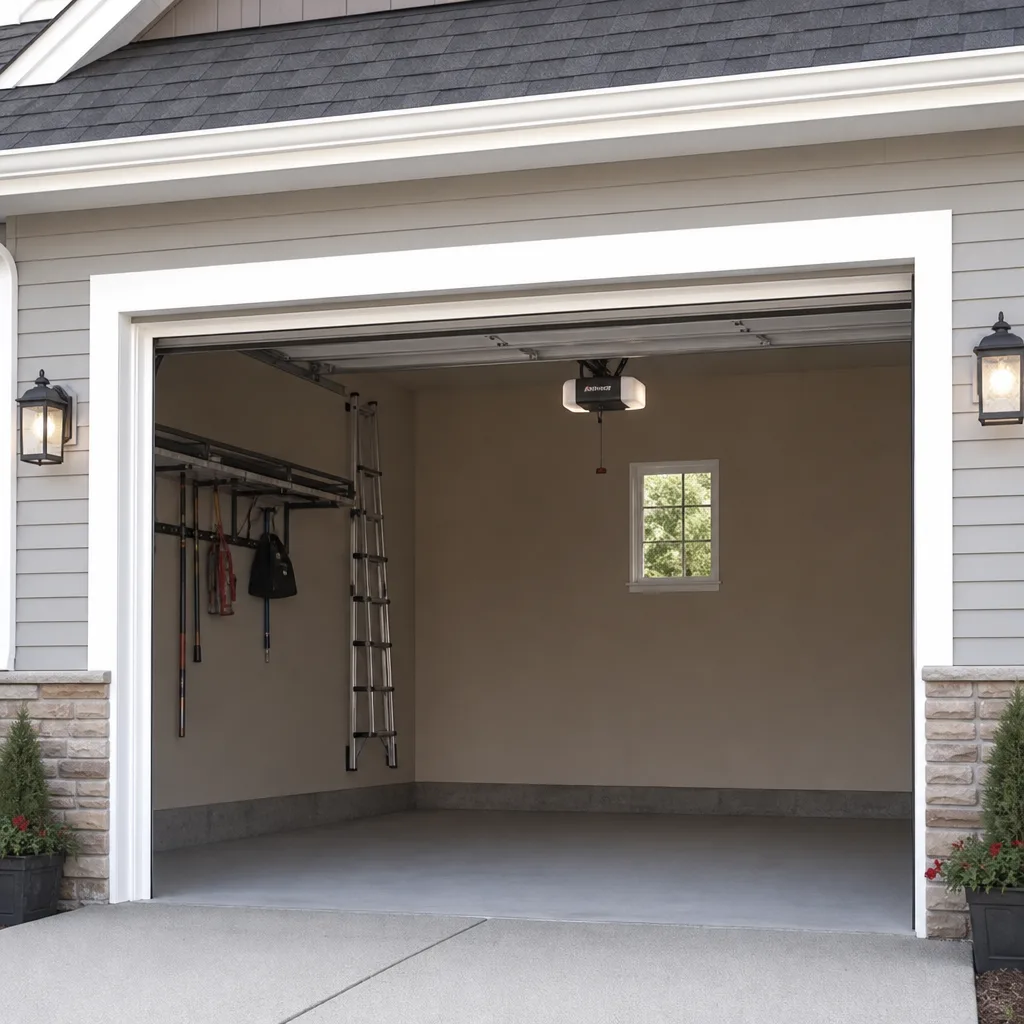
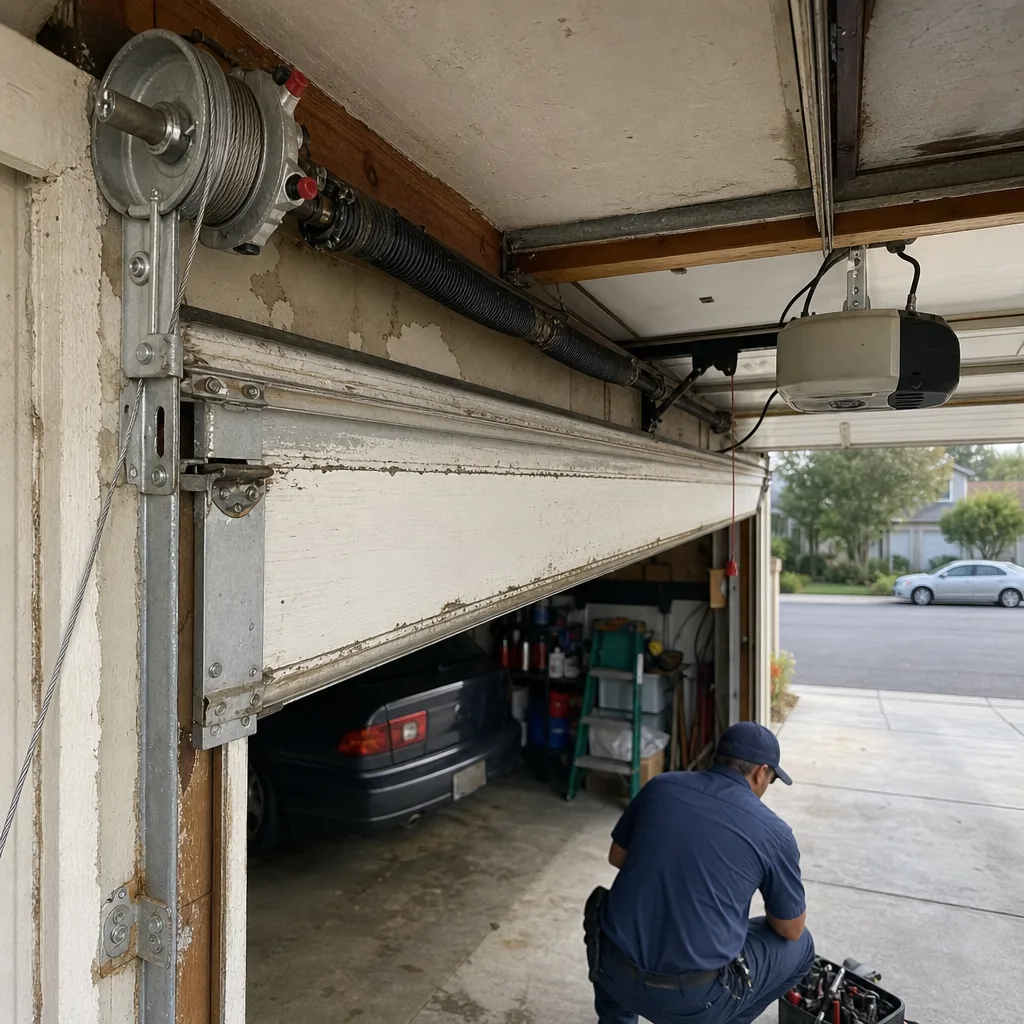 Before
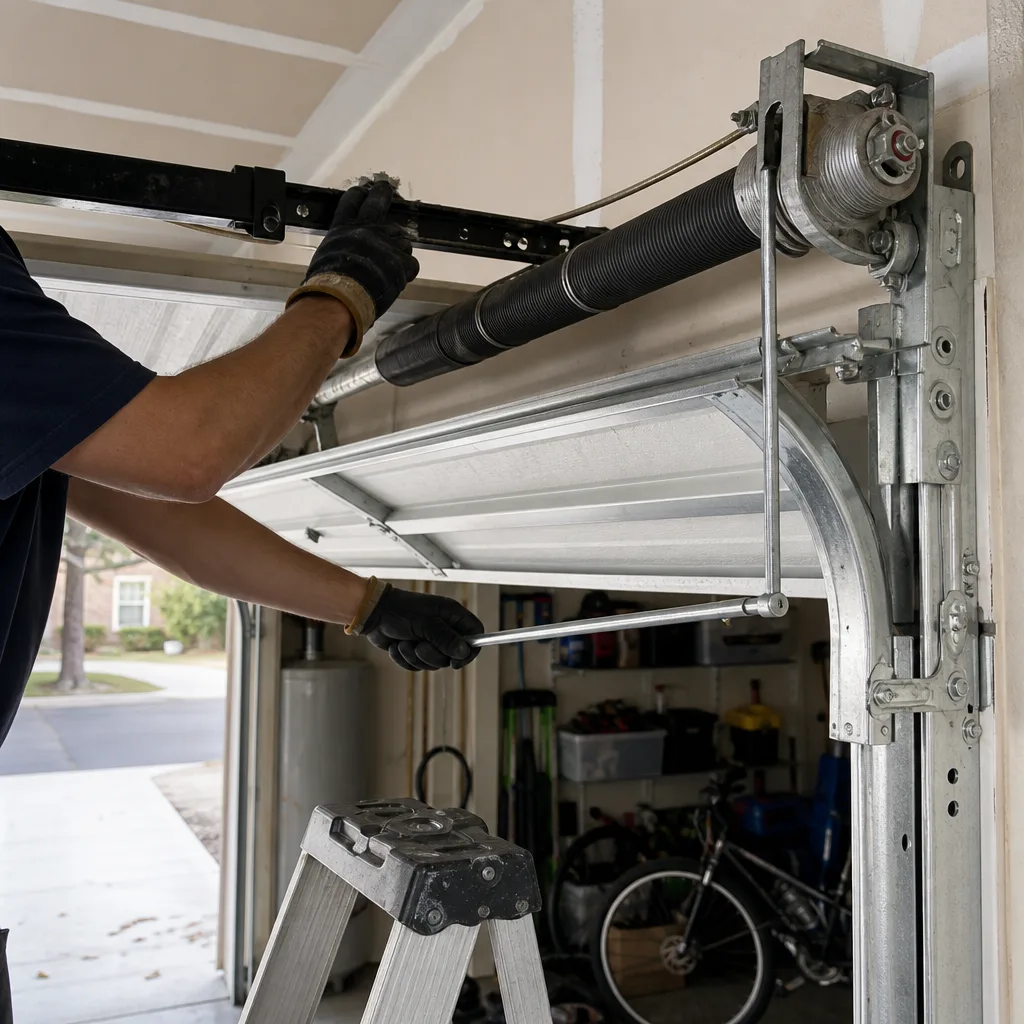 After
After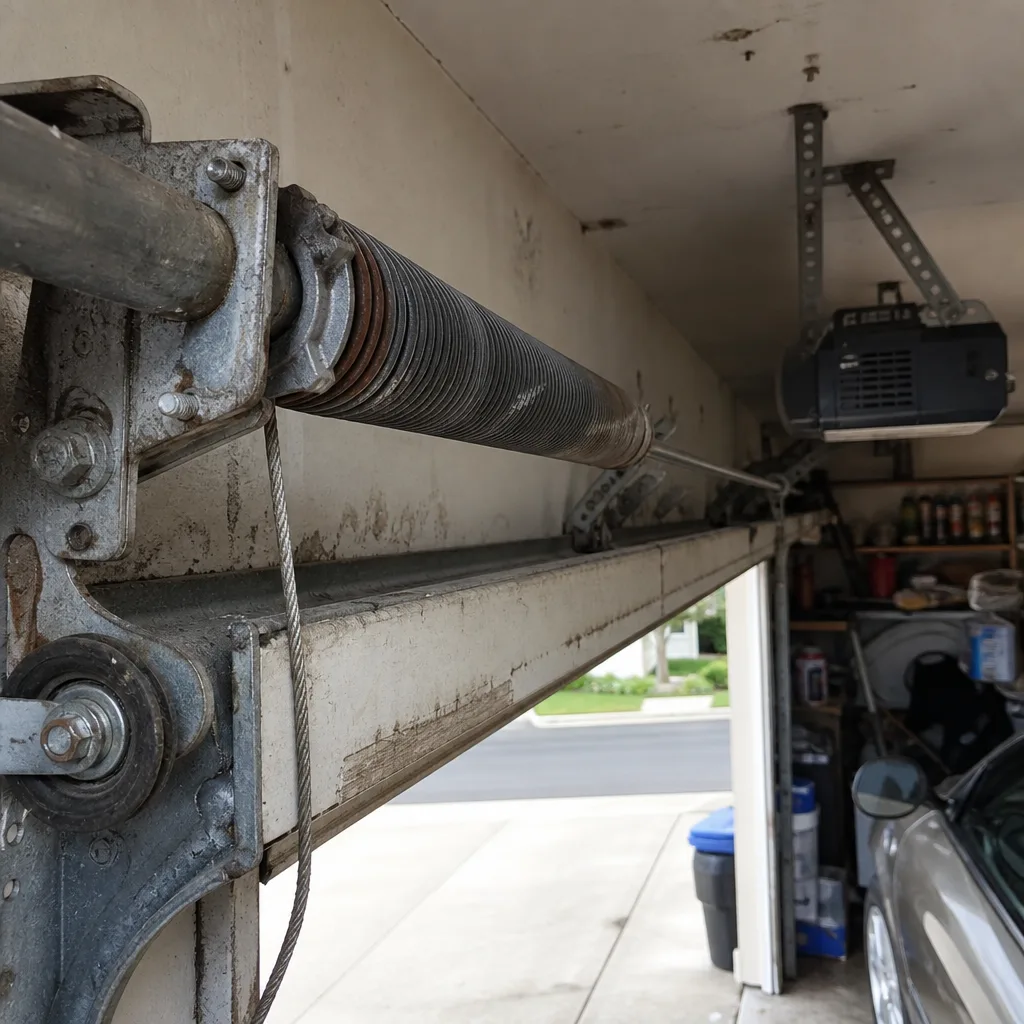 Before
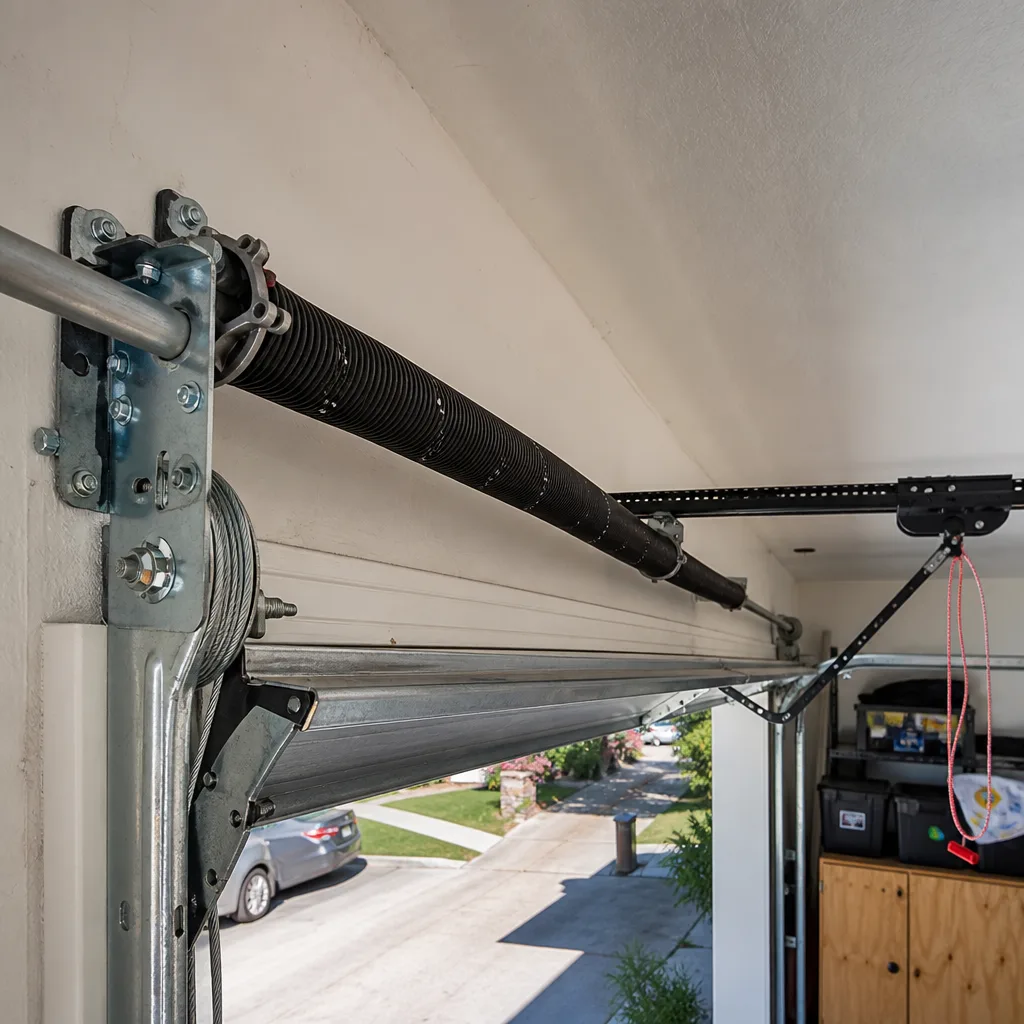 After
After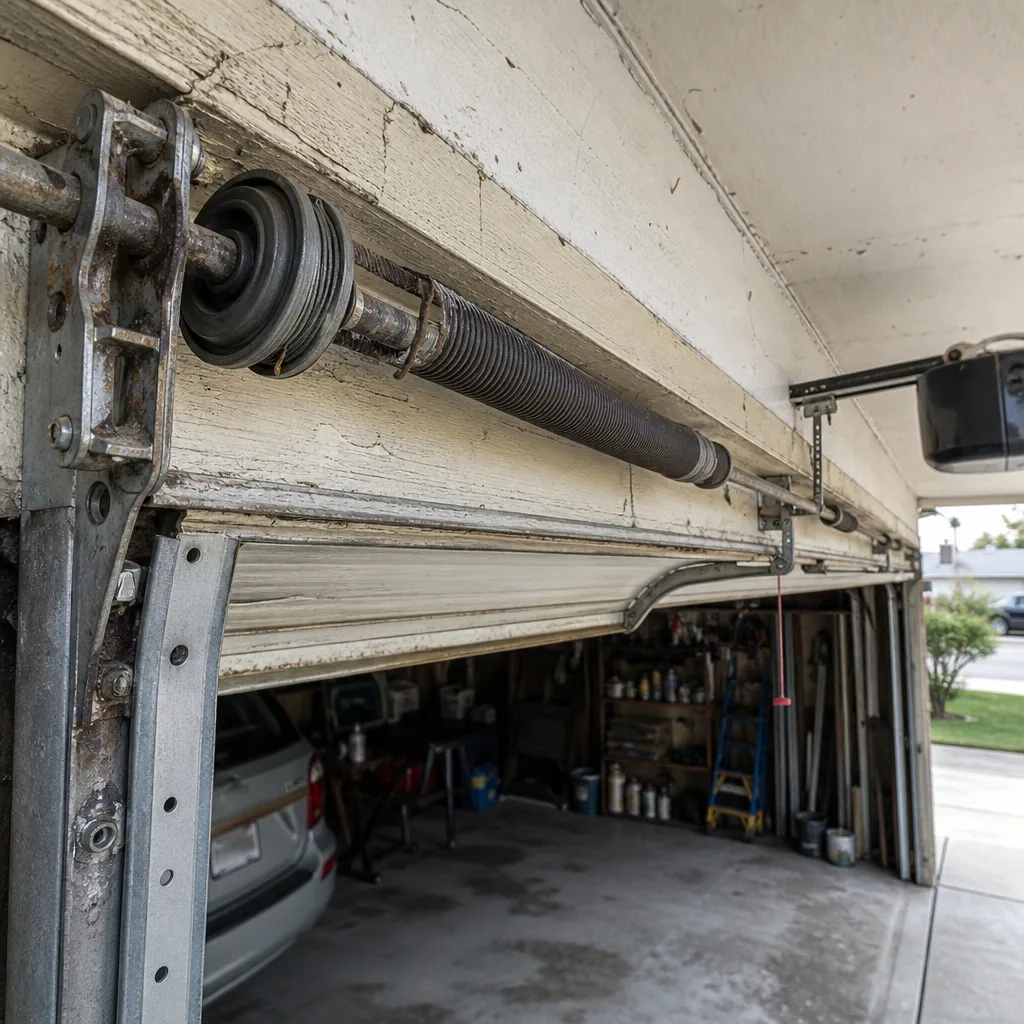 Before
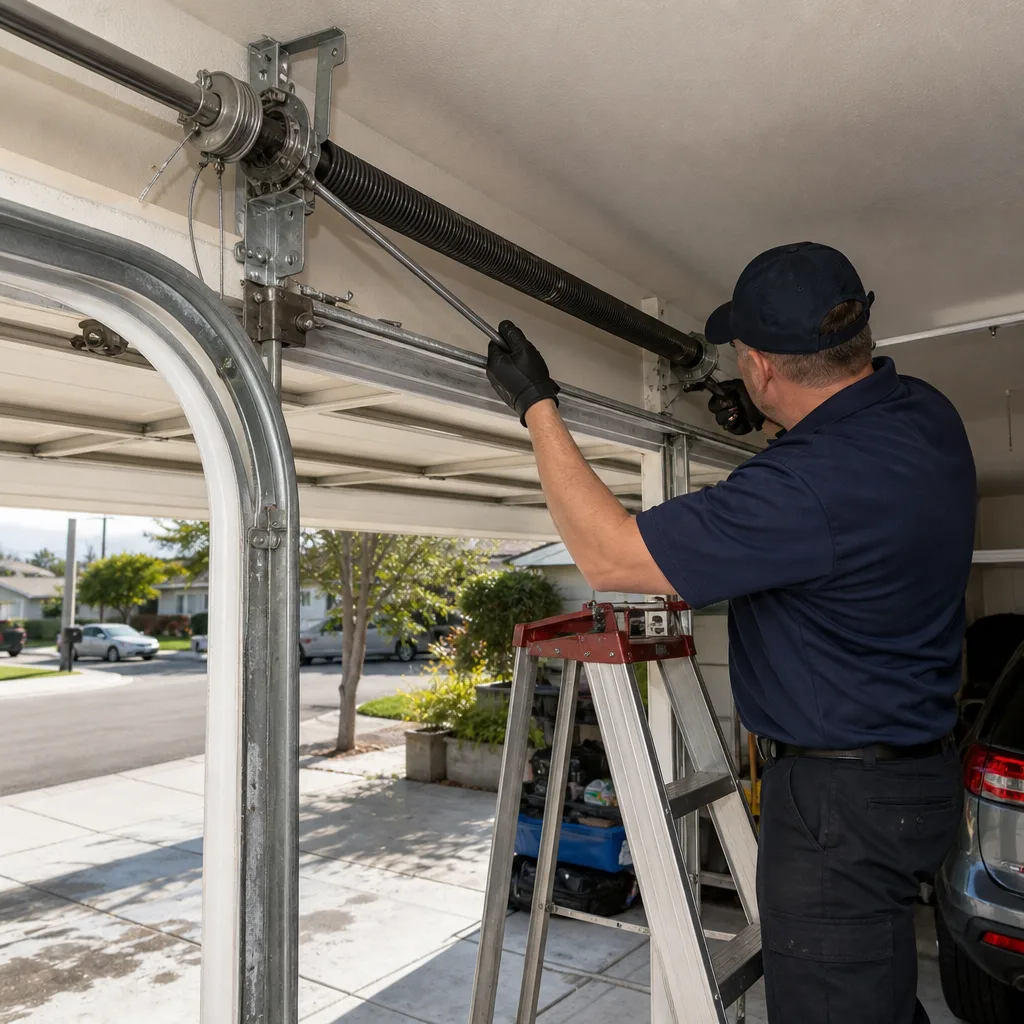 After
AfterThe Complete Guide to Garage Door in Spring Valley
Spring Valley sits in a thermal corridor where afternoon temperatures can swing 35°F from morning to evening. That daily expansion and contraction cycle is invisible to most homeowners, but it is the single biggest reason steel doors rack out of square, wood doors swell at the panel joints, and bottom seals fail two years ahead of the manufacturer’s rated lifespan. In this guide, we will walk you through how Spring Valley’s inland climate, neighborhood HOA rules, and modern vehicle sizes should shape every decision you make about your garage door, from material selection to opener choice to installation timing.
Quick Answer
A garage door in Spring Valley should be selected for thermal stability under wide daily temperature swings, verified against your neighborhood’s HOA architectural guidelines, and sized for the actual vehicles you park. Most homeowners in the 91977 and 91978 ZIP codes do best with an insulated steel door rated R-10 or higher, a belt-drive opener for noise control in attached garages, and a professional measure that accounts for spring wind-load ratings specific to San Diego County’s inland zone.
Table of Contents
- How Spring Valley’s Climate Affects Your Garage Door
- Choosing the Right Material: Steel, Wood, Aluminum, or Composite
- Understanding R-Value vs. Real Thermal Performance
- Door Height, Vehicle Clearance, and High-Lift Conversions
- Selecting an Opener for Spring Valley Homes
- Navigating HOA Restrictions in Spring Valley Neighborhoods
- What Happens During Professional Installation
- Seasonal Maintenance for Local Conditions
How Spring Valley’s Climate Affects Your Garage Door
Spring Valley’s geography puts it in an unusual position. We are close enough to the coast to avoid the desert extremes of El Centro, but far enough inland to feel the full force of the Santa Ana winds and daily thermal shifts that coastal La Jolla barely registers. In July and August, a garage facing west can hit 140°F interior surface temperature by 4 PM, then drop below 70°F by 6 AM. That 70-degree swing happens hundreds of times per year.
Here is what that means for your door:
- Steel doors expand and contract linearly. A 16-foot wide door can change length by nearly 1/8 inch between dawn and mid-afternoon. Without proper clearances and a track system designed for thermal movement, the door binds in the afternoon and rattles in the morning.
- Wood doors, especially solid cedar and redwood popular in older Spring Valley neighborhoods, absorb moisture during rare humid mornings and dry rapidly by afternoon. The result is checking (surface cracking) at the panel joints and delamination of veneered surfaces within three to five years.
- Bottom seals are the canary in the coal mine. The PVC and rubber compounds used in standard seals are rated for continuous temperature exposure, not rapid cycling. In Spring Valley, we see seals harden and lose contact with the floor in 18 to 24 months, versus the 4 to 5 year lifespan the manufacturer claims for moderate climates.
- Torsion springs fatigue faster with heat. A spring rated for 10,000 cycles at 70°F may deliver only 7,500 cycles when regularly exposed to 120°F garage temperatures. This is not a defect; it is thermodynamics.
In the Casa de Oro and Mount Helix-adjacent areas of Spring Valley, where homes sit at slightly higher elevation with more direct sun exposure, these effects intensify. We have measured garage interior temperatures 15°F higher in these microclimates compared to shaded valley-floor homes near Bancroft Drive.
The practical takeaway: material selection and component quality matter more here than in coastal San Diego. A door that performs adequately in Pacific Beach will underperform in Spring Valley. This is why we specify wind-load-rated hardware and high-temp seals as standard on every installation we do in the 91977 ZIP code.
Choosing the Right Material: Steel, Wood, Aluminum, or Composite
Each material carries trade-offs that shift under Spring Valley’s specific conditions. We will walk through them in the order we most often recommend to local homeowners.
Insulated Steel (Our Most Common Recommendation)
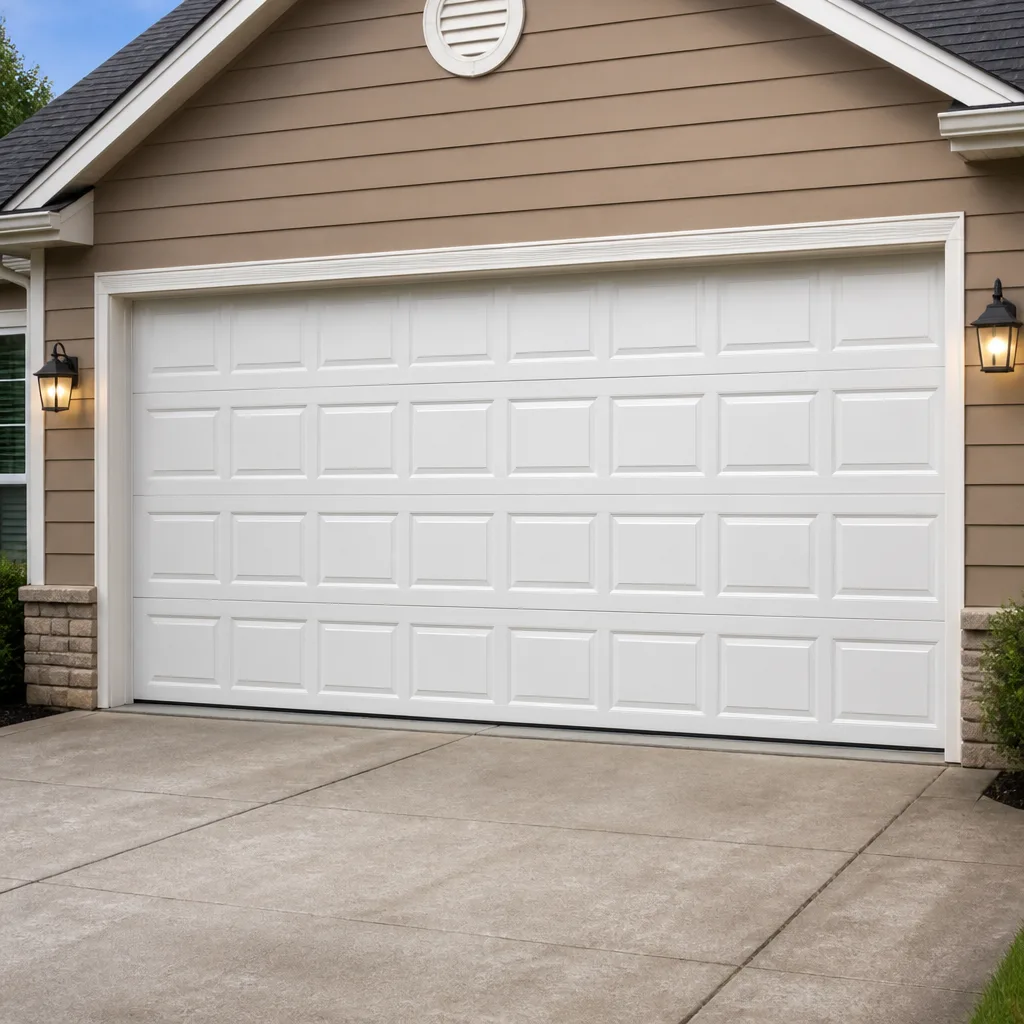
Steel doors with polyurethane or polystyrene insulation cores dominate our installations in Spring Valley, and for sound reasons. The steel skin resists the Santa Ana wind grit that scours unprotected surfaces. The insulation core dampens the thermal expansion of the outer skin. And the sandwich construction, when properly sealed, prevents the condensation that causes rust at panel edges.
We specify 24- or 25-gauge steel minimum for residential doors. The lighter 27-gauge doors sold at big-box stores dent too easily from wind-blown debris and basketball impacts. For coastal-facing homes in the La Presa area, we upgrade to galvanized or Galvalume coatings to resist the salt carried on inland breezes.
Brands we install regularly include Amarr for their wide range of panel styles and HOA-friendly designs, and Wayne Dalton for their TorqueMaster spring system, which conceals the torsion spring inside the tube for cleaner aesthetics and reduced corrosion exposure. Both offer Spring Valley-appropriate wind-load options in their standard catalogs.
Wood and Wood-Composite
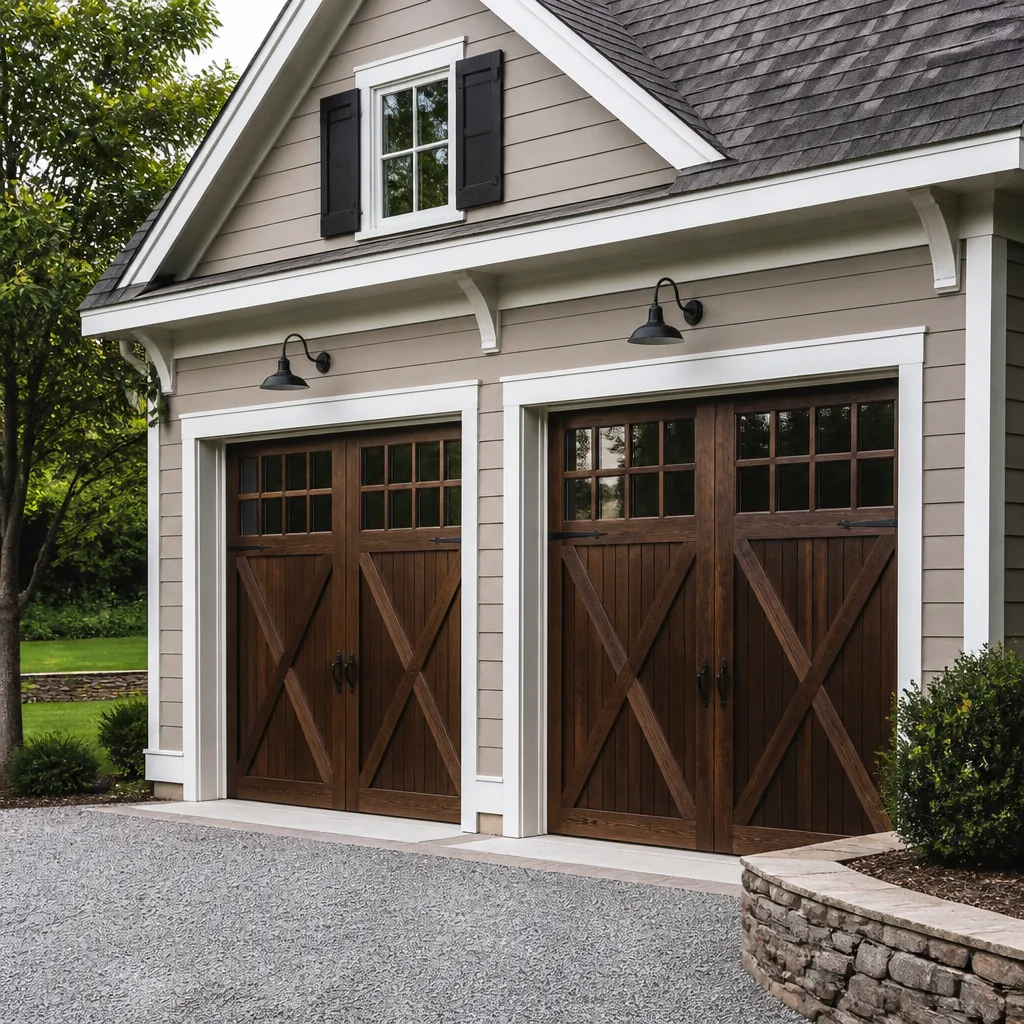
Wood doors remain popular in the older neighborhoods near Spring Valley’s historic core, where original mid-century homes carry architectural covenants favoring natural materials. We do not recommend solid wood for west-facing garages or homes without substantial roof overhangs. The maintenance burden is real: restaining every two to three years, seal replacement annually, and panel adjustment as seasonal swelling changes door balance.
Wood-composite doors, such as those from Craftsman-compatible lines, offer the grain appearance with better dimensional stability. They are not maintenance-free, but the maintenance interval extends to five to seven years in Spring Valley conditions.
Aluminum and Glass
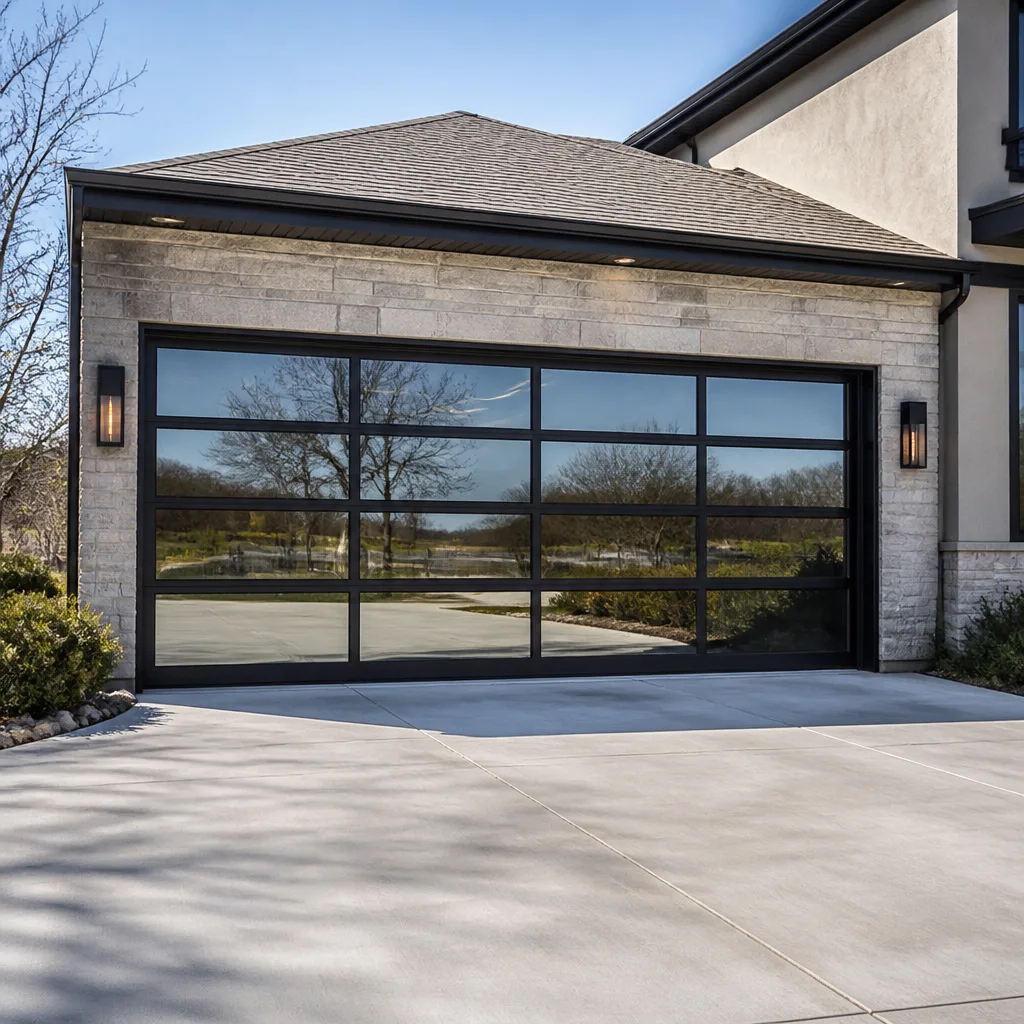
Full-view aluminum doors with glass panels have gained traction in modern infill homes near the Sweetwater River corridor. Aluminum expands even more than steel, so track alignment and roller quality become critical. We only install these with heavy-duty commercial-grade hardware, even on residential applications. The thermal performance is poor without thermal breaks, so we do not recommend them for garages with living space above.
Fiberglass
Fiberglass doors resist corrosion and thermal expansion well, but UV degradation is accelerated in Spring Valley’s high-sun environment. We see surface chalking and fiber exposure within six to eight years on south and west exposures. For most homeowners, insulated steel offers better long-term value.
Understanding R-Value vs. Real Thermal Performance
Door manufacturers advertise R-values prominently. An R-10 door sounds twice as good as an R-5 door. The reality in a Spring Valley garage is more complicated, and the number on the spec sheet often overstates what you will actually experience.
Here is why: R-value is tested on a stationary panel in a laboratory, measuring conductive heat transfer through the center of the door section. It does not account for air leakage at panel joints, gaps around the perimeter, or thermal bridging through the steel skins. A poorly installed R-16 door can perform worse than a properly sealed R-8 door.
More importantly, most Spring Valley garages are not conditioned space. They are ventilated, often through passive soffit vents or louvered doors. In summer, your garage will trend toward outdoor temperature regardless of door R-value. In winter, it will stay slightly above outdoor temperature from residual house heat and vehicle thermal mass. The door’s insulation matters, but it is not the dominant factor.
Where insulation does matter:
- Attached garages with living space above. An uninsulated ceiling in a bedroom over a garage creates a thermal liability. Here, an R-12 or higher door with proper perimeter sealing reduces the cooling load measurably. We have had Spring Valley homeowners report 3°F to 5°F temperature reduction in overhead rooms after upgrading from uninsulated to insulated doors.
- Garages used as workshops. If you spend hours in the garage, insulation plus a small ductless mini-split is a better investment than insulation alone.
- Noise control. The insulation core’s primary practical benefit for many homeowners is noise reduction, not thermal performance. Polyurethane cores dampen opener and street noise significantly better than hollow steel or thin polystyrene.
Our recommendation for Spring Valley: specify a door with a true polyurethane core and a published R-value of R-10 to R-12, then invest equal attention in perimeter weatherstripping, threshold seals, and proper track alignment to eliminate air gaps. The installed system performance matters more than the panel spec.
Door Height, Vehicle Clearance, and High-Lift Conversions
The standard residential garage door is 7 feet high. That specification dates to an era when the Ford F-150 stood 71 inches tall. A 2024 F-150 with a roof rack or antenna clears 78 inches. Add a roof-mounted cargo box for a trip to Big Bear, and you are at 84 inches. The math no longer works.
We see this conflict regularly in Spring Valley, where truck and SUV ownership runs high and many homeowners use their garages for storage, kayaks, and adventure gear. A 7-foot door with a standard radius track leaves roughly 6 inches of headroom above the vehicle at the door opening. Modern vehicles with roof rails, bike racks, or even tall antennas contact the door or header.
When to Consider an 8-Foot Door
New construction in Spring Valley increasingly specifies 8-foot doors for two-car garages. If you are replacing a door and the garage structure allows, the incremental cost is typically $200 to $400 for the taller door and track extension. The framing modification, if needed, adds $300 to $600. For a detailed breakdown of all cost factors, see our Garage Door Cost Breakdown: The Spring Valley Homeowner’s Reference for 2026. For homeowners planning to stay in their home and drive a full-size vehicle, this is usually money well spent.
High-Lift and Vertical-Lift Conversions
When ceiling height is limited, a high-lift conversion raises the door’s horizontal travel closer to the ceiling, increasing clearance without changing the door height itself. Standard residential track uses a 12-inch radius; high-lift track uses 15-inch or 32-inch radius curves. The door still opens to 7 feet, but the vehicle can park closer to the door without contact.
We evaluate three factors before recommending high-lift conversion in Spring Valley:
- Ceiling height. Minimum 10 feet for a meaningful high-lift conversion. Many Spring Valley homes built in the 1970s and 1980s have 8-foot garage ceilings, which limits options.
- Opener compatibility. Chain-drive openers often lack the travel range for high-lift applications. We typically specify a LiftMaster or Chamberlain belt-drive unit with extended rail kits.
- Spring recalculation. High-lift doors require heavier torsion springs to manage the changed leverage geometry. This is not a DIY adjustment; incorrect spring specification causes premature failure or dangerous imbalance.
In the Rancho San Diego-adjacent areas of Spring Valley, where newer homes often include RV-height garages, we regularly install 10-foot and 12-foot doors with full vertical-lift track systems. These require structural headers rated for the additional load and opener systems with jackshaft (wall-mounted) drive rather than overhead trolley designs.
Selecting an Opener for Spring Valley Homes
Garage door openers have become more complex, with smartphone integration, battery backup mandates, and camera systems now standard on mid-tier models. For Spring Valley homeowners, we prioritize reliability and noise control over feature count.
Drive Type: Belt vs. Chain vs. Screw
Belt-drive openers are our default recommendation for attached garages in Spring Valley. The reinforced rubber belt runs quiet enough that bedroom-adjacent garages do not disturb sleep. In the dense neighborhoods near Sweetwater Road and Jamacha Boulevard, where homes sit close to property lines, noise control is also a neighborly consideration.
Chain-drive openers cost less and tolerate high-lift applications better, but the metal-on-metal contact generates 15 to 20 decibels more noise. We reserve these for detached garages or budget-conscious replacements where noise is not a factor.
Screw-drive openers, once common in San Diego County, have largely been discontinued by major manufacturers. The single-point lubrication requirement and plastic carriage wear issues made them less reliable in dusty Spring Valley conditions.
Power and Speed
A 1/2-horsepower opener handles most residential steel doors up to 16 feet wide. We upsize to 3/4 HP for solid wood doors, high-lift conversions, or doors with windows that add weight. Opening speed is standardized at 7 inches per second for safety compliance; “fast” openers that claim higher speeds typically achieve this only in the middle portion of travel, with identical overall cycle time.
Smart Features: Useful or Gimmick?
MyQ integration, available on LiftMaster and Chamberlain models, allows remote monitoring and guest access. For Spring Valley homeowners who travel to Arizona or Palm Springs regularly, the ability to verify door status and grant temporary access to pet sitters or maintenance workers has genuine utility. Camera-equipped models add visual confirmation, though we find the image quality marginal in low-light garage conditions.
Battery backup is now mandated by California law for new opener installations; for details on permits and code requirements, see our Garage Door Permits, Codes & Inspections in CA: What You Need to Know. We specify units with true battery backup, not capacitor-based “emergency release” systems that provide only one or two cycles. Spring Valley’s occasional SDG&E outage during Santa Ana wind events makes this a practical necessity, not just code compliance.
Installation Considerations
Opener installation in Spring Valley requires attention to header condition, electrical outlet placement, and wall button wiring. Many older homes lack a grounded outlet in the garage ceiling; we coordinate licensed electrical work when needed. The opener rail must be level and the door properly balanced before installation; an unbalanced door will destroy an opener’s gears within months.
Our technicians carry LiftMaster, Chamberlain, and Genie units on the truck, along with rail extensions for 8-foot and 10-foot doors. Most garage door opener installations in Spring Valley are completed in a single visit, including removal of the old unit, electrical testing, and safety sensor alignment.
Navigating HOA Restrictions in Spring Valley Neighborhoods
Spring Valley’s development history includes multiple HOA-governed communities with varying architectural control levels. The Highlands, Casa de Oro-Mount Helix, and portions of the La Presa area maintain active architectural review committees with specific garage door requirements. Ignoring these requirements can result in installation denial, forced removal, or fines.
Common HOA Restrictions We Encounter
- Color palettes: Many Spring Valley HOAs restrict door colors to earth tones, whites, or specific Sherwin-Williams or Benjamin Moore matches. “Natural wood tone” often requires actual wood or wood-composite, not steel with woodgrain finish.
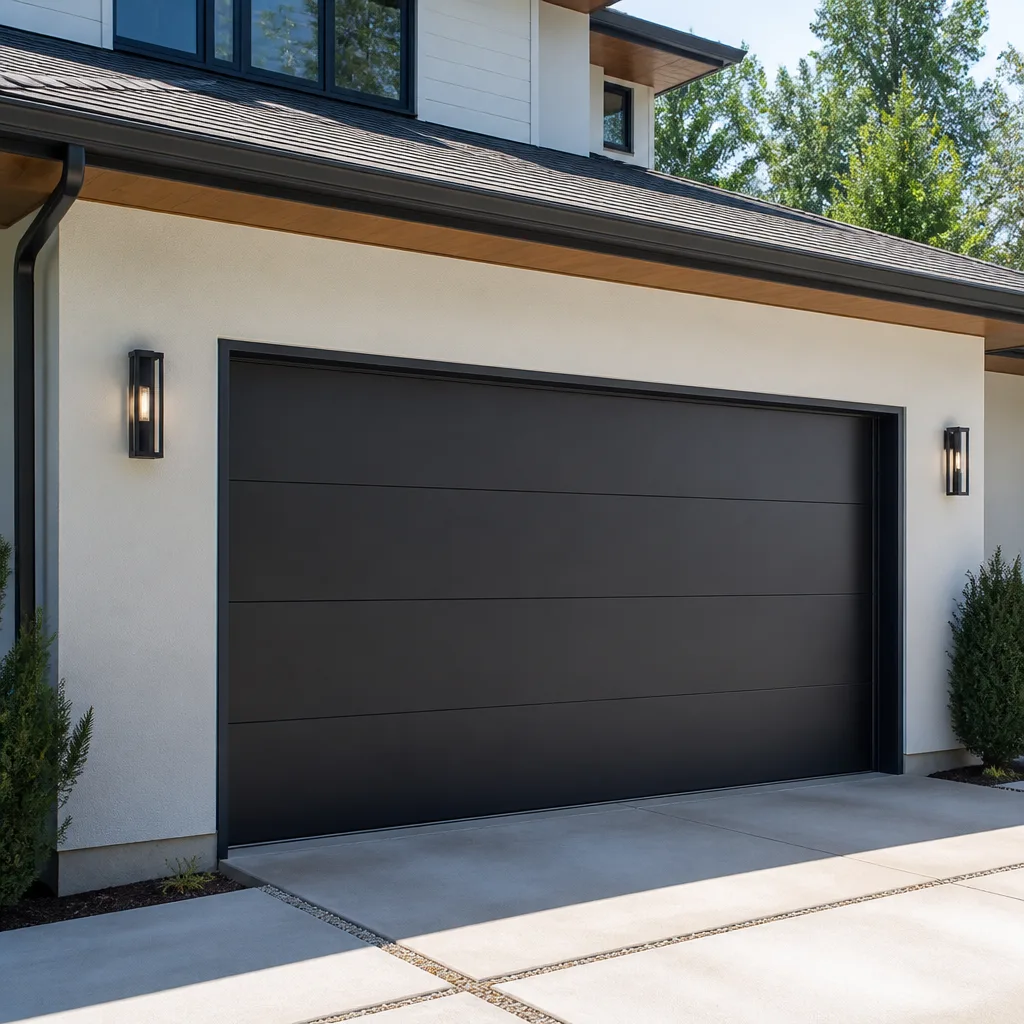
- Panel style: Raised-panel doors are frequently mandated for traditional architectural zones; flush or contemporary panel styles may be restricted to specific streets or excluded entirely. Some HOAs require specific panel counts (short vs. long panels) to maintain visual rhythm.
- Window placement: Upper-section windows are generally permitted; full-view or side-section windows may be prohibited for privacy and security reasons. Grid patterns (sunburst, carriage house, prairie) are sometimes specified.
- Hardware: Decorative strap hinges and handles are sometimes required for carriage-house style compliance; conversely, some modern-design zones prohibit “faux hardware” as inauthentic.
How to Verify Compliance Before Ordering
- Request the current architectural guidelines in writing from your HOA management company. Do not rely on verbal approval from a board member.
- Submit manufacturer cut sheets showing exact color, panel profile, window layout, and hardware specifications. Include the Amarr or Wayne Dalton catalog page with your application.
- Allow 30 to 45 days for review. Rush installations without approval risk rejection.
- Obtain written approval before scheduling installation. We have seen homeowners in the Spring Valley Country Club area forced to replace non-compliant doors at full cost.
We maintain files of approved designs for major Spring Valley HOAs and can often expedite the specification process. Our garage door installation team in Spring Valley will not proceed with HOA-governed properties without written approval in hand.
What Happens During Professional Installation
A proper garage door installation is measured in precision, not speed. We will walk through what a homeowner should expect, what separates a done-right installation from a rushed job that causes problems in year two, and when to consult our DIY vs Professional Garage Door: The Spring Valley Homeowner’s Decision Guide.
The Pre-Installation Measure
We measure twice before ordering once. The critical dimensions are:
- Opening width and height: Measured at three points each (left, center, right for width; top, middle, bottom for height) to identify out-of-square conditions common in older Spring Valley homes.
- Headroom: Distance from top of opening to nearest obstruction. Standard track requires 12 inches; low-headroom track accommodates 9 to 11 inches with modified spring geometry.
- Sideroom: Space between opening edge and wall. Minimum 3.5 inches for standard track, 5.5 inches for vertical-lift applications.
- Backroom: Depth from opening to rear wall. Must equal door height plus 18 inches for standard track, more for high-lift.
- Floor level: We check with a 4-foot level. Spring Valley’s expansive clay soils cause slab settlement; a door installed on an unlevel floor will never seal properly.
Single-Visit Installation Reality
Our trucks carry standard door sizes (8×7, 9×7, 16×7, 16×8), torsion springs in 10-pound increments, track hardware for standard and low-headroom configurations, and openers from three major brands. This inventory allows us to complete most garage door repairs in Spring Valley and standard replacements in one visit.
What causes a return trip:
- Custom-size doors (non-standard widths or heights) that must be factory-ordered
- Structural modifications: header replacement, wall framing, or electrical work
- Specialty glass, custom colors, or HOA-mandated designs outside our standard inventory
- Concrete work to level a severely settled slab
We tell homeowners the truth about timeline during the estimate. If your installation requires a return trip, you will know before we start, not after we have removed your old door.
The Installation Sequence
- Remove old door and hardware. We haul away the old door and track as part of standard service.
- Inspect and prepare opening. This includes checking header integrity, verifying electrical for opener, and addressing any leveling issues.
- Install new track system. Track must be plumb and level within 1/4 inch across the full span. We use laser levels for 16-foot wide doors.
- Hang door sections. Each section is aligned and the hinges torqued to specification. Weatherstripping is installed at panel joints.
- Install spring system. Torsion springs are wound to the specific weight of the door. This is the most dangerous step and should never be attempted without training and proper tools.
- Install and program opener. Rail assembly, trolley connection, safety sensor alignment, and travel limit programming.
- Test and balance. The door must stay at any position when released manually, open and close smoothly, and reverse on obstruction.
- Clean and walkthrough. We remove all debris, demonstrate operation, and provide the written 90-Day Done Right Promise documentation.
Most standard installations in Spring Valley take 3 to 5 hours. We schedule morning starts for full replacements to allow completion before afternoon heat affects adhesive curing on weatherstripping.
Seasonal Maintenance for Local Conditions
A garage door in Spring Valley requires attention twice yearly, timed to the thermal stress peaks: before summer heat arrives and before winter Santa Ana winds begin.
Spring Maintenance Checklist (April-May)
- Inspect bottom seal for hardening or cracking. Replace if it no longer flexes easily.
- Lubricate rollers, hinges, and bearings with silicone-based lubricant. Avoid WD-40, which attracts dust.
- Test door balance: release opener and lift manually. The door should stay at waist height.
- Inspect spring coils for gaps or rust. A failing spring often shows 1/4-inch separation between coils before it breaks.
- Check safety sensors: block the beam with a 2×4; the door must reverse within 2 seconds.
- Tighten all hardware: track bolts, lag screws, opener mounting brackets.
Fall Maintenance Checklist (October-November)
- Repeat seal inspection. Santa Ana winds drive dust and debris; a compromised seal allows accumulation in the track.
- Clear track of debris and old lubricant buildup. Wipe with a clean rag, then re-lubricate sparingly.
- Inspect weatherstripping at door jambs and header. Replace if daylight is visible.
- Test auto-reverse and force settings per manufacturer specification.
- Inspect opener rail for wear at the trolley contact point.
Our $89 Seasonal Tune-Up covers all items on both checklists, including seal and roller replacement if needed. For homeowners who prefer to handle basic maintenance themselves, we provide a printed checklist specific to their door model and Spring Valley’s conditions, plus links to more guides & resources.
Common Mistakes to Avoid
- Ordering a door without verifying HOA approval. We have replaced three doors in Spring Valley in the past two years that homeowners purchased online, only to have their HOA reject the installation. The cost of removal and reinstallation exceeds any online savings.
- Ignoring headroom constraints. A door ordered for standard 12-inch headroom cannot be forced into a 9-inch opening with creative track bending. The door will bind, the opener will strain, and the warranty is void.
- Choosing price over spring quality. The cheapest bid often uses a single torsion spring where the door weight requires two, or a 7,500-cycle spring where 10,000 cycles are needed. In Spring Valley’s heat, that shortcut means replacement in 3 years instead of 7.
- DIY spring replacement. Torsion springs store lethal energy. We have responded to emergency calls where a homeowner’s wrench slipped during attempted spring winding. The resulting injuries are serious and avoidable. This work requires training, proper winding bars, and knowledge of door weight calculation.
- Neglecting the opener when replacing the door. A 20-year-old opener paired with a new, heavier insulated door will fail prematurely. The gear assembly is not rated for the changed load. We assess opener condition during every replacement estimate.
- Assuming all steel doors are equal. Gauge, coating, and insulation type vary enormously. A 27-gauge, uninsulated door from a home center will not survive Spring Valley’s conditions as long as a 24-gauge, polyurethane-core door from a professional line.
When to Call a Professional
Some garage door issues are maintenance items a homeowner can address. Others require trained technicians with the right tools and safety protocols.
Call a professional when: the door is off its track and hanging at an angle; a torsion spring is broken or showing visible coil separation; the opener motor runs but the door does not move; the door reverses immediately after touching the floor; you hear grinding or popping noises from the spring area; or the door has been struck by a vehicle and shows visible panel or track damage.
These scenarios involve high-tension components, precise balance calculations, or structural assessment that goes beyond homeowner maintenance. Mainspring Garage Door Co. offers free estimates in Spring Valley. Carl Dutton and our team will assess your door, explain what we find, and quote a flat price before any work begins. Call (619) 825-2139 to schedule.
Frequently Asked Questions
A standard 16×7 insulated steel door with installation in Spring Valley typically ranges from $1,200 to $2,800, depending on insulation level, window configuration, and hardware quality. Wood doors and custom sizes run $3,500 to $6,500. We provide written, itemized estimates with no obligation. Call (619) 825-2139 for exact pricing on your specific opening.
Most standard replacements are completed in 3 to 5 hours. Custom doors, structural modifications, or electrical work may extend to a second day. We confirm the expected timeline during your estimate so you can plan accordingly.
No. Our estimate is based on a complete measure and assessment, either in person or from detailed photos and dimensions you provide. The price we quote is the price on the invoice. If we discover unexpected structural damage during installation, we stop and discuss options before proceeding. There are no surprises on the bill.
Yes. Our trucks stock torsion springs, extension springs, cables, rollers, hinges, weatherstripping, and openers from LiftMaster, Chamberlain, and Genie. Most garage door repairs in Spring Valley are completed in a single visit.
Sustained winds of 40 to 60 mph create pressure on the door surface that strains the track and opener. Wind-load-rated doors and properly secured track hardware prevent blow-in or blow-out damage. We assess wind exposure during every estimate and upgrade hardware on west and south-facing doors.
If any aspect of our work is not right, we return and make it right at no charge. This is stated in writing on every job, with no dispute process or paperwork required. Carl Dutton stands behind this personally, as he has since founding Mainspring Garage Door Co. in Spring Valley.
The Bottom Line
Spring Valley’s climate demands more from a garage door than generic advice acknowledges. The daily thermal swings, Santa Ana wind exposure, and specific HOA requirements mean your material choice, insulation specification, and installation quality directly determine how many years you get before the next replacement. Measure for the vehicles you actually drive, verify your HOA requirements before ordering, and invest in components rated for inland Southern California conditions. A door selected and installed with these factors in mind will run quiet, seal tight, and stay square through a decade of Spring Valley mornings and afternoons.
Written by Carl Dutton, Owner at Mainspring Garage Door Co., serving Spring Valley since 2016.