
Last updated September 10, 2026
Full 25-point door and opener safety check with every visit - springs, cables, rollers, tracks, and your LiftMaster or Chamberlain opener included
You get a price before we start. It does not change when the truck arrives.
 Before
 After
After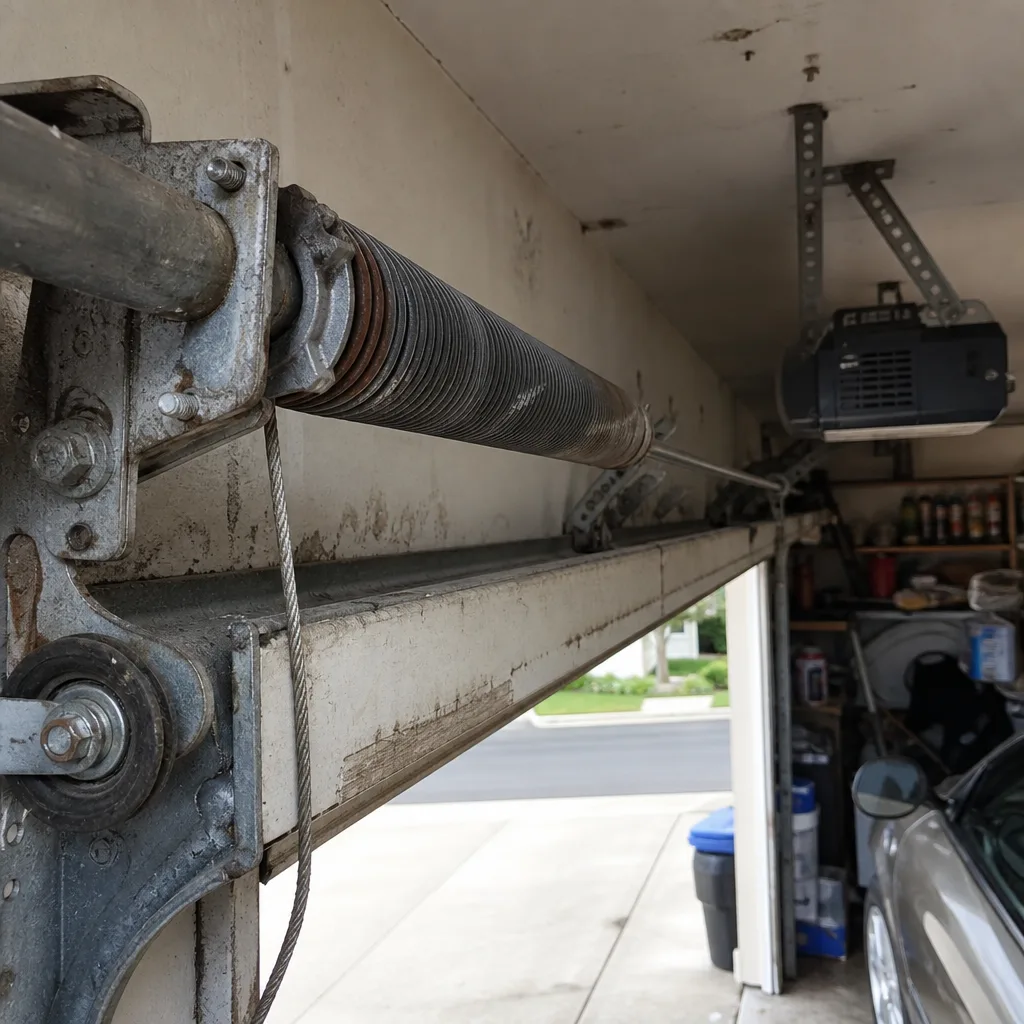 Before
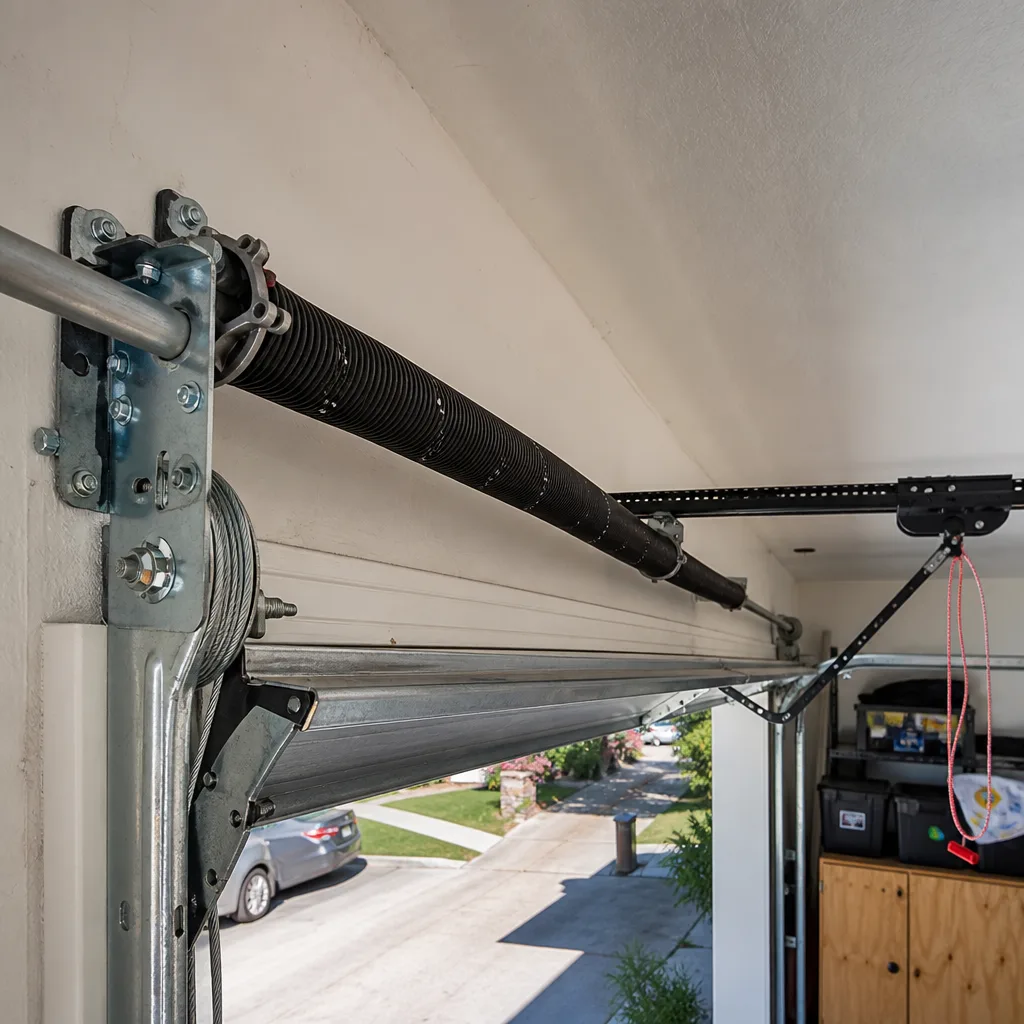 After
After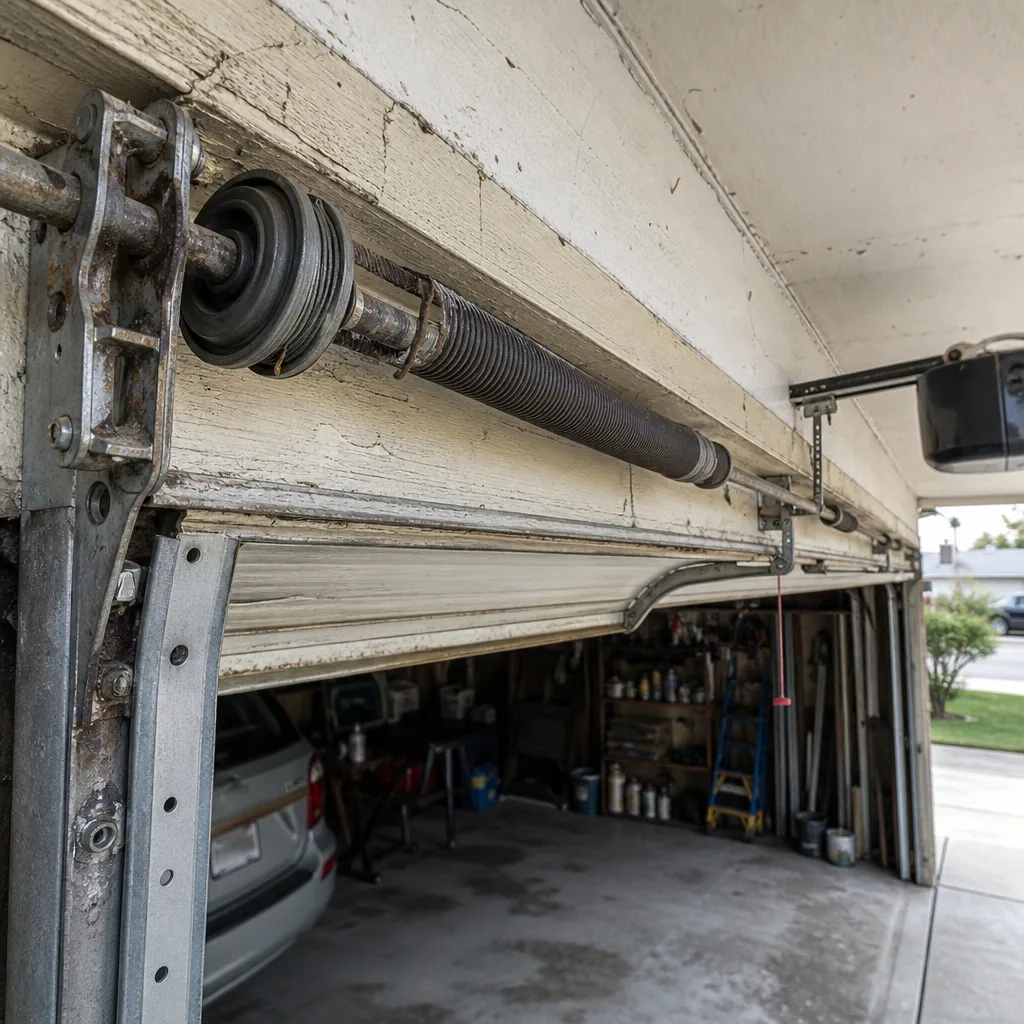 Before
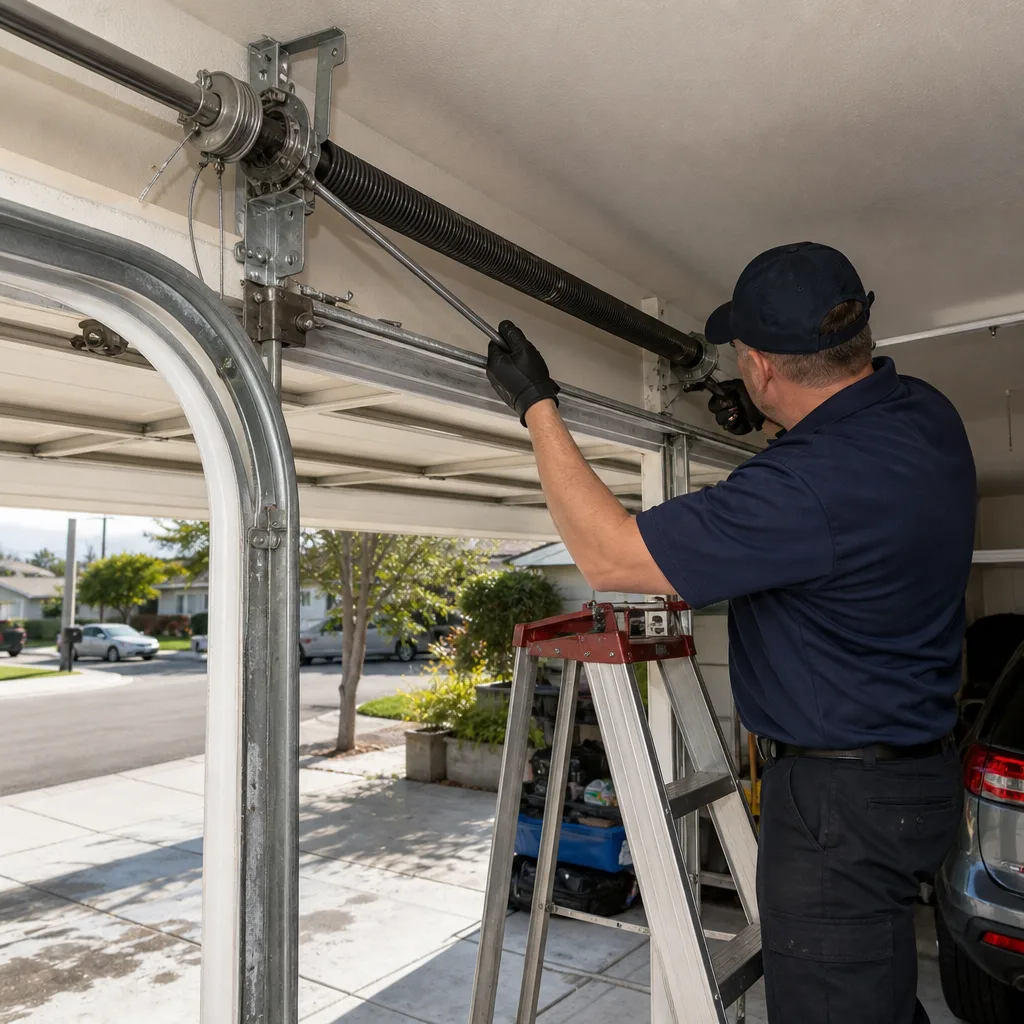 After
AfterDIY vs Professional Garage Door: The Spring Valley Homeowner’s Decision Guide
Torsion springs store enough energy to fracture a wrist bone on an accidental release. That fact does not appear in any YouTube tutorial thumbnail, yet it does appear in emergency room intake records with notable regularity. In Spring Valley, where many homes were built during the 1970s and 1980s garage-door boom and are now hitting their fourth or fifth spring cycle, we see the aftermath of well-intentioned DIY attempts more often than we would like. This guide is not here to shame the handy homeowner. It is here to separate what you can safely handle from what requires rated tools, trained hands, and an understanding of garage-door physics that comes only from repetition. You will learn which tasks belong on your workbench, which belong on ours, and how to tell the difference before you commit to either path.
Quick Answer
Most Spring Valley homeowners can safely handle weatherstripping replacement, photo-eye cleaning, and basic lubrication. Spring replacement, cable winding, track realignment, and opener rail work should be left to professionals with proper winding bars, cable clamps, and torque training. The cost of renting or buying the correct tools for a one-time spring job typically exceeds a professional service call, and the injury risk is not theoretical - torsion springs can cause severe trauma on release.
Table of Contents
- The Physics Problem: Why Garage Doors Are Different
- What You Can Safely Do Yourself
- The Danger Zone: Tasks That Require Professional Tools and Training
- The True Cost of DIY: Tools vs. One Service Call
- The Smart Middle Path: Partial DIY with Professional Repair
- The Liability Question: What Happens When DIY Goes Wrong
- How to Evaluate Durability: The Three-Point Check
- How to Hire a Garage Door Professional in Spring Valley
The Physics Problem: Why Garage Doors Are Different
A garage door is the largest moving object in a typical home. A standard sixteen-foot double door in a Spring Valley ranch-style home weighs between 150 and 250 pounds depending on construction - steel, wood composite, or the occasional original wood panel. The spring system exists to make that weight manageable. Without it, you would need a team to lift the door. With it, a child can raise it with one hand.
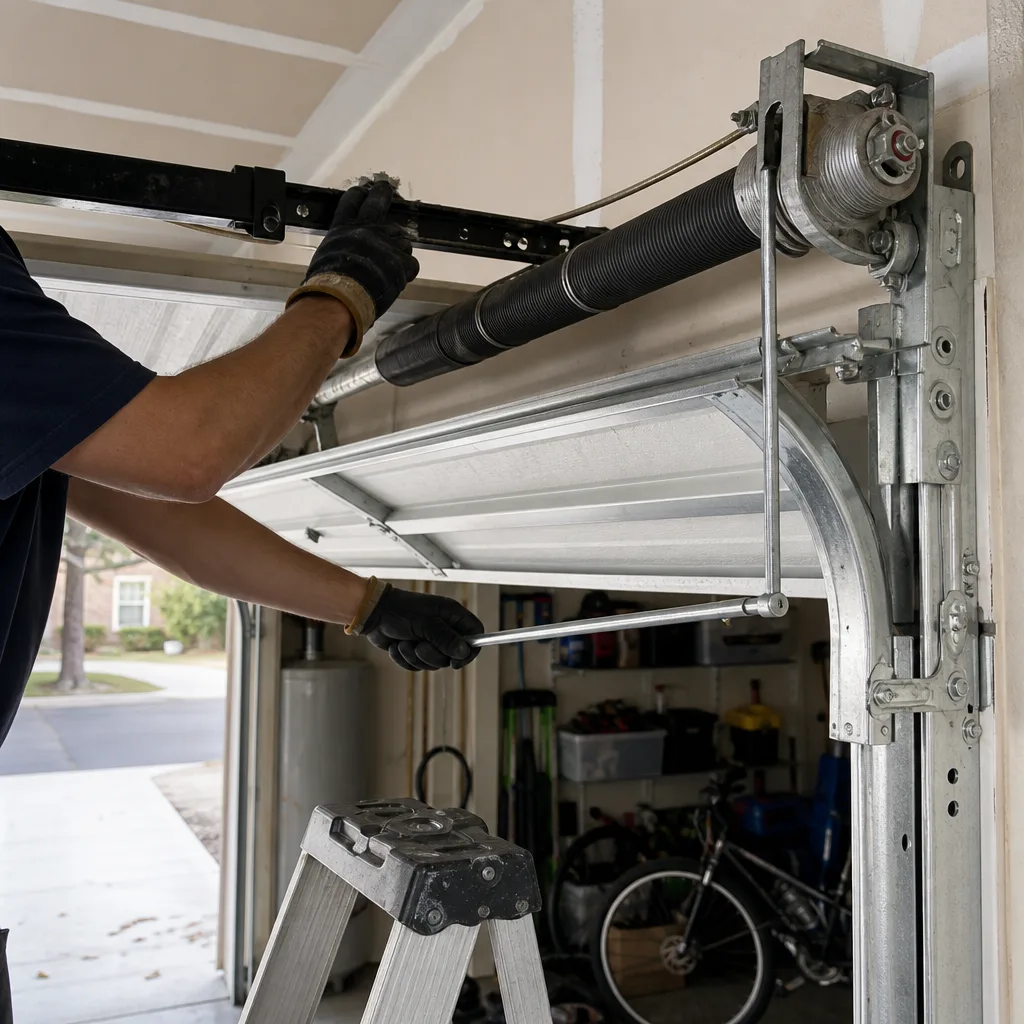
That mechanical advantage comes from stored energy. Torsion springs, mounted on a steel shaft above the door, are wound tight with hundreds of foot-pounds of torque. Extension springs, running parallel to the horizontal tracks, stretch under load and recoil with significant force. In both cases, the component doing the work is under deliberate, calculated tension - and that tension does not care whether the person releasing it is a professional or a homeowner who watched a twelve-minute video.
Spring Valley’s climate adds a variable that DIY guides rarely address. Our combination of dry heat, occasional Santa Ana winds, and marine layer moisture means springs fatigue faster than in consistently dry or consistently humid climates. A spring that might last ten years in Phoenix often shows wear at seven or eight here. The rust that forms during humid mornings weakens the metal; the heat cycling accelerates metal fatigue. We have replaced springs in Spring Valley garage door repair calls that looked intact but had micro-fractures invisible to casual inspection. A homeowner winding a compromised spring faces a higher failure risk than a professional who inspects for those fractures before touching the winding bars.
The physics also explain why “it worked when I tested it” is not sufficient. A door that opens and closes after a DIY spring replacement has not proven safety - it has only proven function. The test of safety comes under load, over cycles, and in the moment of maximum stress when a cable slips or a spring anchor bolt shears. Those moments do not announce themselves.
What You Can Safely Do Yourself
Not every garage door task involves stored energy. Several maintenance and minor repair jobs are well within the capability of a careful homeowner, and doing them regularly can extend the life of your system significantly.
Weatherstripping Replacement
The vinyl or rubber seal at the bottom of your door and the flexible stops along the jambs are wear items. They dry out, crack, and let in dust, water, and the occasional Spring Valley field mouse. Replacement requires no tools beyond a utility knife, a tape measure, and possibly a hammer to tap the new seal into the retainer channel. Buy the correct profile - T-style, bead-style, or bulb-style - by bringing a sample to the hardware store. This is a thirty-minute job that saves energy and keeps your garage cleaner.
Photo-Eye Cleaning and Alignment
Modern openers manufactured by Chamberlain, Genie, and other major brands include infrared safety sensors near the floor. When these misalign or accumulate dust, the door refuses to close or reverses unexpectedly. Clean the lenses with a soft cloth, check that both sensors show steady indicator lights, and adjust the brackets until the lights align. The LED colors vary by manufacturer, so consult your manual. This is diagnostics, not repair - no disassembly required.
Basic Lubrication
Apply a silicone-based spray or white lithium grease to the roller bearings, hinge pivots, and the top of the torsion spring - not the winding cones, never the cables. Run the door up and down to distribute. Do this twice yearly, ideally before and after the dusty Santa Ana season. Avoid WD-40 as a lubricant; it is a solvent that strips protective oils.
Remote and Keypad Troubleshooting
Dead batteries, erased codes, and interference from LED bulbs are common culprits. Replace batteries, reprogram remotes per the manufacturer’s instructions, and swap any generic LED bulbs in the opener housing for bulbs rated for garage door use. Chamberlain and Genie both publish clear reprogramming sequences.
What these tasks share: no stored energy to release, no specialized tools required, and no risk of cascading failure if done imperfectly. If you misalign a photo-eye, the door simply will not close until you fix it. If you mis-wind a torsion spring, the consequences are immediate and severe.
The Danger Zone: Tasks That Require Professional Tools and Training
Some jobs are not “hard” in the sense of requiring great strength or speed. They are dangerous because they require precise technique at the moment of highest risk, and because the consequences of error are disproportionate to the mistake.
Torsion Spring Replacement
This is the task most homeowners attempt and most regret. The process requires:
- Securing the door in the open position with locking pliers or a solid prop - not a flimsy ladder.
- Inserting winding bars - solid steel bars, not screwdrivers or makeshift substitutes - into the cogs of the winding cone.
- Adding or releasing tension in quarter-turn increments, counting carefully, with the correct torque specification for your door’s weight and height.
- Installing a new spring matched to the door’s weight, drum size, and lift type.
- Releasing the door and testing balance: it should stay at any height between fully open and fully closed without drifting.
The danger points are numerous. Using the wrong bars or letting a bar slip during winding releases stored energy instantly. Miscounting turns leaves the door unbalanced, stressing cables and opener gears. Installing an incorrectly rated spring - common with aftermarket parts - leads to premature failure or violent separation. In Spring Valley, where many homes have non-standard door heights from the building boom era, the correct spring is rarely the one on the hardware store shelf.
Cable Replacement and Winding
Cables run from the bottom brackets to the drums at the ends of the torsion shaft. When they fray or snap, they must be wound with precise tension matching the opposite side. Uneven winding causes the door to lift crooked, binding in the tracks and potentially derailing. The bottom brackets are under spring tension even when the door is down - a fact many DIYers discover too late.
Track Realignment and Shimming
Bent or misaligned tracks cause rollers to bind and pop out. Realignment requires a level, proper spacing from the door face, and often shimming to account for settled framing. In Spring Valley’s hillside areas and older developments with expansive soil, garage door frames shift over decades. A track that looks straight to the eye may be subtly twisted, causing wear that only a trained technician recognizes.
Opener Rail and Drive Gear Work
Chain, belt, and screw drive openers by Chamberlain, Genie, and other brands have internal gears and limit switches that require specific adjustment. The rail assembly supports significant dynamic load. Improper reassembly after gear replacement leads to stripped gears, burned motors, or doors that close with crushing force.
We do not provide step-by-step instructions for these tasks because the risk of serious injury outweighs any educational value. If you are considering any of them, professional garage door repair in Spring Valley is the appropriate path.
The True Cost of DIY: Tools vs. One Service Call
The economics of DIY garage door repair are frequently miscalculated. Homeowners compare the cost of a spring - perhaps $40 to $80 at a hardware supplier - against a professional service call of $180 to $340 and conclude that DIY saves money. This comparison omits several necessary inputs.
Required tools for a safe torsion spring replacement:
- Two solid steel winding bars, 18 inches, half-inch diameter: $25-$40
- Vise-grips or locking pliers rated for the load: $20-$35
- Winding bar holder or safety collar (prevents bar ejection): $30-$50
- Torque wrench or calibrated tensioning device: $80-$150
- Cable clamps and cable puller: $40-$70
- Proper ladder rated for the work height: $100-$200
- Safety glasses and leather gloves: $15-$30
Total: $310 to $575 for tools you may use once. This assumes you already own a socket set, level, and other basics. It also assumes you select the correct tools on the first attempt - many homeowners buy inadequate bars and must replace them after discovering the danger of undersized substitutes.
The professional service call includes the correct spring (rated and matched), all necessary tools (already amortized over thousands of jobs), the technician’s training, liability insurance, and the warranty. At Mainspring Garage Door Co., our 90-Day Done Right Promise covers the work in writing. If the spring fails or the door drifts within ninety days, we return at no charge. No paperwork dispute, no argument. That guarantee has value a DIY repair cannot replicate.
For Spring Valley homeowners on fixed incomes, we offer a permanent 5% senior and veteran discount and a $50 reduction on any repair over $250. The out-of-pocket difference between DIY and professional repair narrows considerably with these standing offers.
The Smart Middle Path: Partial DIY with Professional Repair
There is a productive middle ground between total DIY and total delegation. It involves doing the diagnostic work yourself, communicating findings clearly, and handing the repair to a professional with full context. This approach saves time, reduces callbacks, and gives you confidence that you are not paying for unnecessary work.
Step-by-Step: The Homeowner Diagnostic
- Observe and document. Note exactly when the problem occurs - on opening, closing, or both. Record any sounds: grinding, popping, squealing, or silence where motor noise should be. Take a video with your phone; the audio often reveals what a description misses.
- Check the obvious. Are the photo-eye LEDs steady? Is the opener plugged in and the breaker intact? Does the door move freely by hand with the opener disconnected? A door that hangs heavy or drifts down has a spring problem. A door that moves smoothly by hand but not with the opener has an opener or electrical problem.
- Inspect visually, without touching. Look for frayed cables, cracked springs, bent tracks, or loose hardware. Do not test cables by hand - a frayed cable can snap under inspection. Note the spring type (torsion above the door, extension along the tracks), the door dimensions, and the opener brand and model.
- Communicate to the technician. When you call, describe symptoms in sequence: “The door opens six inches and stops. The springs look intact. The opener is a Genie model from 2019.” This lets the technician arrive with the correct parts, which is why most of our Spring Valley repair calls finish in a single visit.
The partial DIY approach respects your competence while acknowledging the limits of homeowner tools and training. It also builds a relationship with a local trade shop you can call again - a significant advantage when you plan to stay in your home for decades.
The Liability Question: What Happens When DIY Goes Wrong
This section addresses a question few DIY guides raise: the legal and financial exposure of a homeowner who performs garage door repair and later faces injury or property damage.
California premises liability law holds property owners responsible for maintaining safe conditions. If a guest, delivery driver, or family member is injured by a garage door that fails after DIY repair, the homeowner’s insurance may investigate whether the repair was performed competently. Many homeowner policies exclude coverage for injuries resulting from “unlicensed or improper repair of mechanical systems.” The specific language varies by carrier, but the direction is consistent: DIY work on high-tension systems shifts risk to the homeowner in ways that professional service does not.
Vehicle damage presents a similar exposure. A door that collapses onto a car because a cable was improperly secured, or because a spring anchor bolt was not torqued to specification, leads to a claim against your auto policy - with the same scrutiny of whether the maintenance was performed by a qualified party. Deductibles apply, premiums may rise, and disputes over coverage are common.
Professional garage door companies carry general liability and workers’ compensation insurance specifically for these scenarios. At Mainspring Garage Door Co., our coverage protects both our technicians and your property. If a rare failure occurs after our work, the claim runs through our policy, not yours. That separation of risk is part of what you pay for in a service call, and it is worth including in your calculation.
In Spring Valley’s established neighborhoods, where many homeowners have significant equity and assets to protect, this liability consideration is not abstract. A single incident can generate medical and legal exposure far exceeding the cost of professional repair.
How to Evaluate Durability: The Three-Point Check
Whether you attempt limited DIY or hire a professional, understanding how to verify a repair’s quality protects you from callbacks and premature failure. These three checks are standard in our trade and can be performed safely by any homeowner.
Check One: Static Balance
Disconnect the opener by pulling the red release cord. Manually lift the door to waist height and release it. A properly balanced door stays in place or drifts slowly. If it races up or crashes down, the spring tension is incorrect. This test reveals balance problems before they damage the opener or create a hazard.
Check Two: Travel and Force Limits
Reconnect the opener and run a complete cycle. The door should open fully without straining and close completely without reversing. Place a 2×4 board flat on the floor in the door’s path - the door should reverse on contact. Test the force sensitivity by gripping the door lightly during closing; it should reverse with moderate resistance. These settings are adjustable on Chamberlain, Genie, and most major brands, but incorrect adjustment is a common post-repair error.
Check Three: Hardware Torque and Cable Integrity
Visually inspect all fasteners for tightness - not by touching, but by observing whether bolts have backed out or brackets have shifted. Check cables for fraying, kinking, or uneven winding on the drums. Listen for popping or grinding during operation, which indicates binding or misalignment. In Spring Valley’s dry climate, cable corrosion is less common than in coastal areas, but dust accumulation in drum grooves causes uneven wear that a visual inspection catches.
Perform these checks one week after any repair, and again at thirty days. Problems that emerge early typically trace to installation error; catching them within the warranty period protects your investment. Our 90-Day Done Right Promise is specifically designed to cover this emergence window.
How to Hire a Garage Door Professional in Spring Valley
If you decide professional service is the right path, the quality of the company you hire matters as much as the decision to hire. Spring Valley has options ranging from national franchises to one-truck operators to established local shops. Here is how to evaluate them.
Look for longevity and local roots. A company that has served Spring Valley for decades has a reputation to maintain and community ties that discourage fly-by-night behavior. We have been here since 1984, founded when this area was still developing. That history means we have worked on the same doors multiple times across different owners, and we know which builders used which hardware in which subdivisions.
Verify insurance and licensing. Any legitimate operator carries general liability insurance and can provide proof. California does not require a specific garage door contractor license, but a C-61/D-49 (doors and gates) or C-10 (electrical, for opener work) classification indicates formal training. Ask directly; evasion is a red flag.
Demand upfront pricing. The flat price should be stated before work begins, with no surprises on the bill. This is standard practice at Mainspring Garage Door Co. and should be non-negotiable anywhere. Our $89 Seasonal Tune-Up and free second opinion on any written estimate are standing offers that never disappear.
Check response and availability. A live person should answer your call, including nights and weekends. Phone trees and voicemail during business hours suggest a company stretched too thin. Our phones are staffed 24/7 because garage door failures do not observe business hours.
Ask about parts inventory. A technician who arrives without the necessary parts wastes your time and extends your inconvenience. Our trucks carry springs, cables, rollers, and openers from major brands including Clopay, Amarr, and others, which is why most jobs finish in one visit.
For new garage door installation in Spring Valley, the same criteria apply with added emphasis on measurement accuracy and product knowledge. Door sizing in older homes often deviates from standard, and a company that orders from a catalog without field verification will delay your project.
Common Mistakes to Avoid
- Using screwdrivers or pins as winding bars. The internet is full of advice to substitute “anything solid” for proper winding bars. A screwdriver is not rated for torsion load and can become a projectile. We have seen the resulting injuries in Spring Valley emergency rooms.
- Replacing only one spring on a two-spring door. Springs fatigue together. Installing one new spring with one worn spring creates imbalance, premature failure, and opener damage. Always replace springs in matched pairs.
- Ignoring the door’s age and hardware condition. A 1980s door in Spring Valley’s original La Presa or Casa de Oro neighborhoods may have obsolete hardware, non-standard track spacing, or asbestos-containing materials in older insulated panels. A professional inspection identifies these before they complicate repair.
- Testing a repair with the opener before manual verification. Always test balance and travel by hand before reconnecting power. An opener will force a misaligned door, masking problems while damaging gears or creating a safety hazard.
- Buying springs by door weight alone. Spring selection requires drum diameter, door height, track radius, and lift type. A spring “close enough” to the specification will fail early and may not balance the door properly.
- Neglecting to check cable condition after spring replacement. New springs expose weakened cables to higher load. Cables that held with fatigued springs often fail under full design tension. Inspect and replace together.
When to Call a Professional
Call a professional when the task involves stored mechanical energy, when specialized tools are required for safe execution, when the repair affects safety systems, or when you cannot verify the outcome with confidence. Specifically: spring replacement, cable work, track realignment, opener internal repair, and any situation where the door has fallen off its tracks or hangs unevenly.
We do not believe every homeowner should avoid every tool. We do believe that an honest assessment of risk, tool cost, and long-term durability leads most Spring Valley homeowners to professional service for the high-tension components while handling maintenance themselves. Mainspring Garage Door Co. offers free estimates in Spring Valley - call (619) 825-2139. A live person answers, day or night, and we will tell you honestly whether your situation requires a visit or can be resolved with guidance.
Frequently Asked Questions
Professional torsion spring replacement in Spring Valley typically runs $180 to $340 for a standard residential door, including parts, labor, and warranty. Extension spring systems cost slightly less. The exact price depends on door size, spring type, and whether additional components like cables or rollers need replacement. Call (619) 825-2139 for a free, exact quote - estimates are free and the price is stated before any work begins.
You should not replace one spring on a two-spring system. Matched springs fatigue at similar rates, and pairing a new spring with a worn one causes imbalance, premature failure, and opener damage. The safe approach is replacing both springs with matched, rated components. This is a task for a professional with the correct winding bars and torque specifications.
Safe homeowner maintenance includes: lubricating roller bearings, hinges, and the top of torsion springs with silicone or white lithium grease; replacing bottom weatherstripping; cleaning and aligning photo-eye sensors; and testing the opener’s force and reverse functions. These tasks involve no stored energy release and require no specialized tools. Perform them twice yearly, ideally before and after the dusty season.
Warning signs include: the door feels heavier to lift manually, opens unevenly or with jerking motion, visible gaps in the spring coils, or a loud bang from the garage (the sound of a spring snapping). In Spring Valley’s climate, springs often show surface rust before failure. If you observe any of these signs, schedule professional inspection before the spring fails completely - a broken spring can damage cables, opener gears, or the door itself.
At Mainspring Garage Door Co., the price quoted after inspection is the price you pay. We state the flat price before any work begins, with no surprises on the bill. Our free estimate includes full diagnosis and a written quote. If additional problems are discovered during repair, we discuss them with you before proceeding. This no-hassle upfront pricing is part of our commitment to a square deal.
Yes. Our technicians arrive with springs, cables, rollers, hinges, and openers from major brands including Chamberlain and Genie already on the truck. Most repairs are completed in a single visit with no waiting for parts and no second trip. This is standard for our Spring Valley garage door repair service. Call (619) 825-2139 and a live person will confirm availability for your specific need.
The Bottom Line
The DIY versus professional question for garage doors is properly framed around physics, not cost. A garage door is the largest moving object in your home, and the components that make it manageable are under deliberate, dangerous tension. Homeowners can and should handle maintenance, diagnostics, and minor repairs that do not involve stored energy. Spring replacement, cable work, track realignment, and opener internal repair require tools, training, and insurance that make professional service the sound choice for most Spring Valley homeowners. The true cost of DIY includes tool acquisition, injury risk, liability exposure, and the absence of warranty protection. When you weigh all factors, a professional repair from an established local shop is typically the better value - and the safer one. We have stood behind our work for over 42 years, and we will be here when you need us.
Written by Carl Dutton, Owner at Mainspring Garage Door Co., serving Spring Valley since 2016.